Mel Gibson: Beyond the Celebrity Label – AI Explores What Stars Really Want
Mel Gibson's raw confession about being tired of the 'celebrity' label reveals a deeper truth: famous people crave authentic human connection. We explore how AI and technology are reshaping our understanding of celebrity identity.

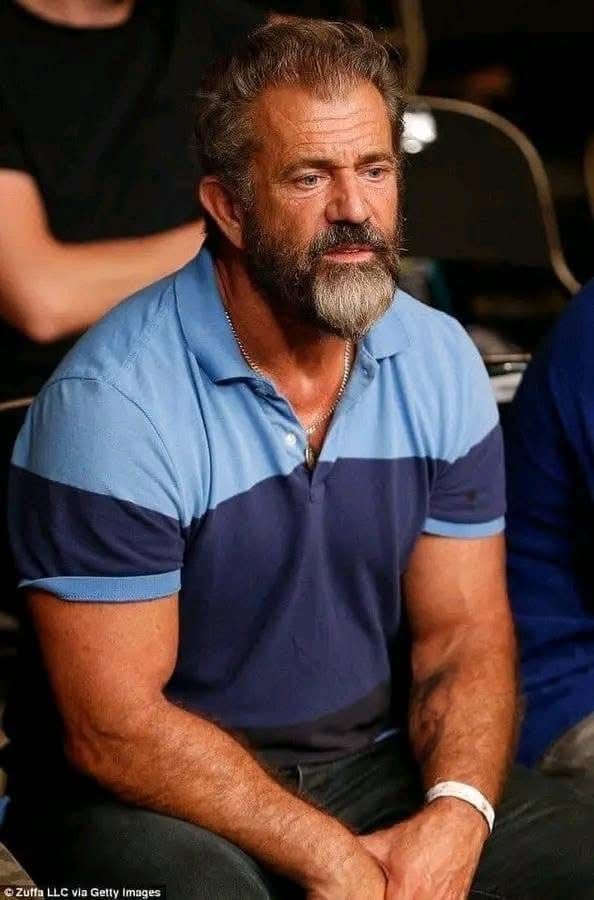
Mel Gibson: Beyond the Celebrity Label – How AI Reveals What Stars Really Need
Mel Gibson just said something that most A-listers are too afraid to admit: he's exhausted by being treated as a celebrity rather than a human being. And honestly? In an age of AI algorithms that categorize and label everything we do, his frustration is hitting different—and raising some serious questions about identity, fame, and what it means to be human.
The Celebrity Label Problem: More Relevant Than Ever
Gibson's core complaint is simple but profound: "I am fed up of people saying I am a celebrity." He's not denying his fame, wealth, or success. What he's rejecting is the reductive label that turns a complex, multifaceted human being into a one-dimensional icon. In his words, behind the "celebrity" brand is "a caring, compassionate, loving, loyal, funny, humble man" with genuine emotional needs.
This hits harder when you consider our current AI-driven world. Algorithms don't see Mel Gibson as a person—they see data points: actor, director, box office revenue, social media engagement, controversy metrics. Every interaction gets filtered through computational lenses that reduce humanity to categories and labels. Gibson's plea is essentially: "I exist beyond your algorithm."
AI and the Dehumanization of Fame
Here's where it gets interesting. The same technology that built Gibson's empire—recommendation algorithms, digital distribution, targeted marketing—has also created a prison of sorts. AI systems have learned to package celebrities into digestible narratives. They don't care about the man behind the legend; they care about engagement rates and click-through conversion.
Machine learning models trained on celebrity data learn to see famous people as content generators, not humans with hearts and vulnerabilities. Every post, every interview, every appearance gets reduced to quantifiable metrics. Gibson's exhaustion is partially a symptom of living in a world where even your deepest emotions can be analyzed, packaged, and sold back to you as a "brand narrative."
The irony? Gibson made his career in an industry obsessed with creating believable human characters. Now, he's experiencing what many actors understand: the character you play for the world can completely obscure your actual self.
What Does Gibson Actually Want? Understanding Human Needs at Scale
Gibson breaks down his needs clearly: respect, love, care, and recognition as a human being rather than a label. These are fundamentally human requirements—psychological needs that no amount of fame or wealth can automatically satisfy.
This is fascinating from an AI perspective because it highlights something machines struggle with: context. An AI might optimize for "keeping Mel Gibson relevant" (maximize engagement, feed the algorithm, maintain brand value), but it can never truly understand what Gibson actually needs emotionally. No recommendation system can prescribe genuine human connection.
This points to a larger crisis in celebrity culture: the entire ecosystem is designed to prevent authentic human connection. Publicists, managers, algorithms, and media structures all create barriers between the person and genuine interaction. It's not a conspiracy—it's just how modern systems work.
The Loneliness Algorithm: Why Fame ≠ Connection
Gibson articulates something crucial: "That's why I feel so alone because everyone just sees that level." Despite being one of the most recognized faces on Earth, he experiences isolation. This is the celebrity paradox, and AI is making it worse, not better.
When your existence is mediated through algorithms and digital platforms, authentic connection becomes nearly impossible. Everyone interacts with your public persona, not you. Your AI-generated recommendations reach millions but connect with none authentically. You're everywhere and nowhere simultaneously.
Studies on AI and social isolation are starting to show this isn't unique to celebrities—it's becoming normalized across society. As AI mediates more of our interactions, we're collectively experiencing what Gibson is describing: being seen as a label rather than a person.
The Sacrifice Narrative: Why Hard Work Doesn't Equal Respect
Gibson mentions sacrificing his life for entertainment, which deserves deeper examination. He worked from "the bottom upwards," clawed his way to success, and used his talents to spread happiness. Yet despite this sacrifice, he receives transactional respect—recognition of his achievements, not his humanity.
This disconnect reveals something important about how we value people in the AI age. We've built systems that reward output (films, performances, content) but can't measure or respect the person behind it. The algorithm doesn't care that Gibson sacrificed his personal life; it cares that he generated engagement.
FAQ: Celebrity Identity and AI in 2024
Q: Is this just a rich person complaining?
A: Not really. While Gibson's position is privileged, his complaint highlights a structural problem: the systems we've built to create and manage celebrity status are fundamentally dehumanizing. This affects everyone from A-list actors to micro-influencers.
Q: Can AI help solve this problem?
A: Ironically, yes and no. Better AI could theoretically help filter out the noise and help celebrities connect with genuine fans. But most AI development moves in the opposite direction—creating more sophisticated labeling systems that further reduce humanity to data.
Q: Should we have sympathy for celebrities dealing with this?
A: The real question is: what does this tell us about our society? If our systems are crushing the humanity out of some of our most visible people, what's happening to everyone else? Gibson's complaint might be the canary in the coal mine.
Q: How does this relate to AI deepfakes and digital personas?
A: It's connected. As AI can now create convincing digital versions of celebrities, the line between "real" person and "branded" persona becomes even more blurred. Gibson is fighting against becoming a pure algorithm—a digital construct optimized for engagement.
What Happens Next: The Future of Celebrity Humanity
Gibson's statement is a wake-up call. As AI becomes more sophisticated at managing, predicting, and packaging human identity, we need to consciously protect space for genuine humanity. This means:
- Demanding transparency from algorithms that mediate celebrity communication
- Resisting reductive labeling in both AI systems and media narratives
- Creating boundaries between public persona and private humanity
- Reconsidering metrics that reduce people to engagement numbers
Gibson's frustration isn't about being famous—it's about being compressed into a label by a system (both human and algorithmic) that has no interest in his full humanity. As AI becomes more central to how we create, distribute, and consume celebrity culture, his complaint deserves serious consideration.
The question isn't whether Mel Gibson deserves respect as a human. The question is: how do we build systems—both technological and social—that allow famous people (and everyone else) to be recognized as fully human? That's a challenge our AI-driven world hasn't solved yet.