Mercedes-Benz CLA: How AI-Powered MBUX Infotainment Redefines Luxury Driving
Mercedes-Benz unveiled the revolutionary CLA Coupé at CES 2019, featuring an evolved MBUX infotainment system powered by artificial intelligence. This deep dive explores how the Mercedes-Benz CLA's AI capabilities are reshaping what it means to drive a luxury vehicle in the modern era.

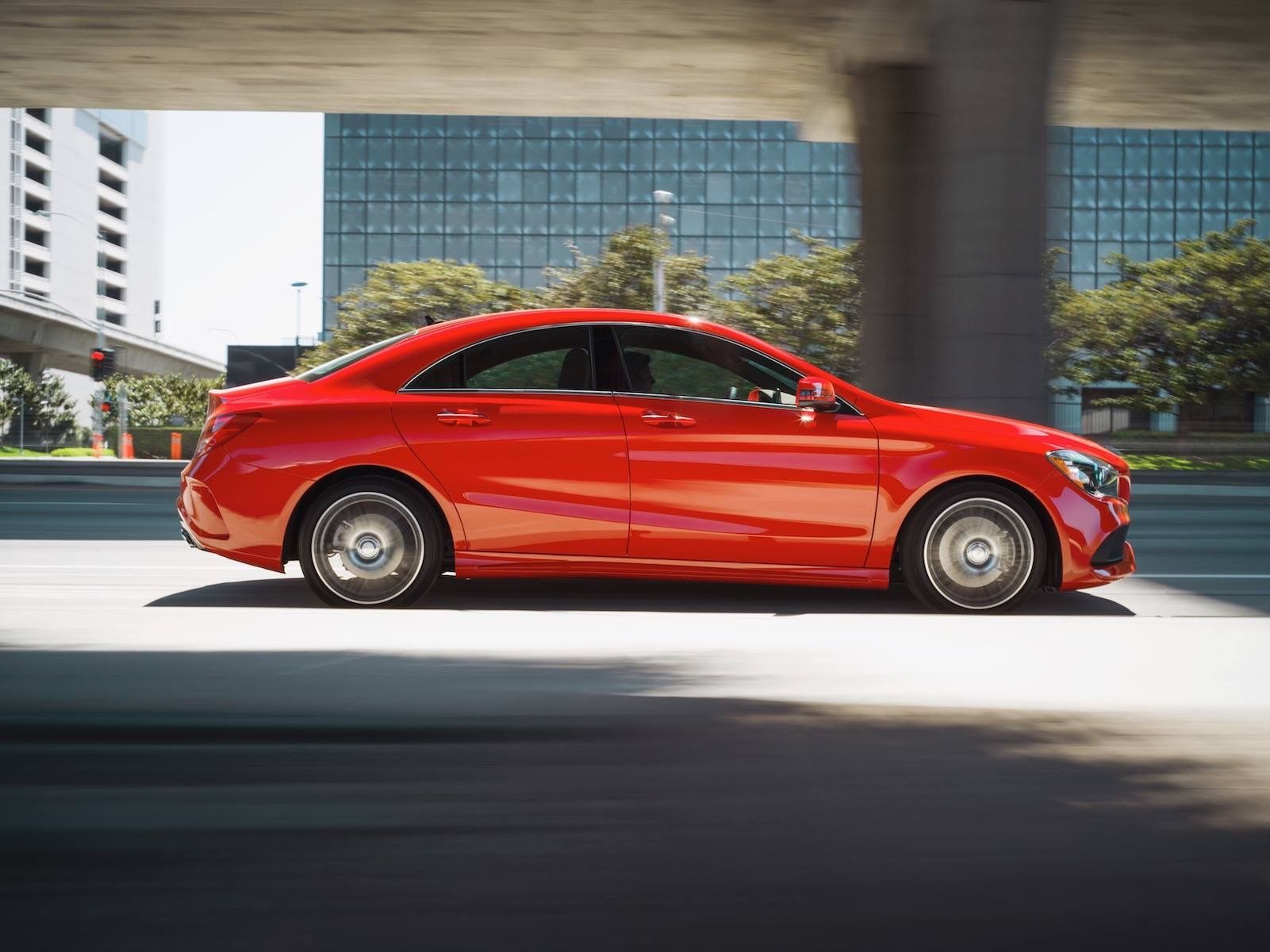
When Mercedes-Benz rolled out the new Mercedes-Benz CLA Coupé at CES 2019, the automotive world took notice—not just for its sleek design, but for what was happening inside the cabin. The further evolution of the MBUX infotainment system represented a watershed moment in how artificial intelligence would fundamentally reshape the driving experience. This wasn't simply about touchscreens and voice commands anymore; it was about predictive intelligence, machine learning, and an AI system that actually learns driver behavior patterns to anticipate needs before they arise.
By YEET Magazine Staff | Published: 2019-06-11
The Mercedes-Benz CLA has long been positioned as the entry point to Mercedes luxury, but with AI-enhanced MBUX integration, it became something more ambitious: a testbed for how machine learning could democratize premium automotive experiences. The new MBUX system uses natural language processing to understand conversational queries, contextual awareness to predict navigation requests based on time of day and calendar data, and adaptive algorithms that personalize everything from climate control to infotainment suggestions based on individual driver preferences.
What makes the Mercedes-Benz CLA's AI infotainment particularly noteworthy is its predictive capabilities. Unlike traditional systems that simply respond to commands, MBUX now anticipates. If you typically visit your workplace on weekdays at 8 AM, the system learns this pattern and proactively suggests navigation to that location as your departure time approaches. If you have a meeting scheduled in your calendar, MBUX cross-references weather data, traffic patterns, and historical travel times to recommend departure windows that account for real-world conditions. This level of personalized AI integration transforms the Mercedes-Benz CLA from a luxury conveyance into an intelligent assistant.
The voice recognition technology embedded in the Mercedes-Benz CLA's MBUX system operates through deep learning neural networks trained on millions of speech samples. This enables the system to understand regional accents, colloquialisms, and even context-dependent requests with remarkable accuracy. A driver might say "I'm hungry," and the MBUX system—understanding the vehicle's location, time of day, and the driver's historical restaurant preferences stored in machine learning models—will suggest nearby dining options that match previous choices. This predictive personalization is where artificial intelligence elevates the Mercedes-Benz CLA beyond conventional luxury vehicles.
The integration of AI with the Mercedes-Benz CLA's autonomous driving capabilities also represents a significant leap forward. The MBUX system now communicates with driver-assistance features, analyzing real-time road conditions, traffic patterns, and driving behavior to optimize both safety and efficiency. Machine learning algorithms continuously analyze accident data and near-miss incidents across the entire Mercedes-Benz CLA fleet to update safety protocols. This collective intelligence means every Mercedes-Benz CLA benefits from the driving experiences of thousands of other vehicles on the road.
Energy efficiency is another area where the Mercedes-Benz CLA benefits from AI optimization. The system's algorithms analyze driving patterns, road topology, weather conditions, and traffic forecasts to recommend optimal routes that minimize fuel consumption or battery drain (particularly important for the CLA's electric variants). The AI learns individual driving styles and can suggest more efficient acceleration or braking patterns, subtly coaching drivers toward behaviors that extend vehicle range and reduce emissions.
From a consumer perspective, the Mercedes-Benz CLA's AI-enhanced MBUX represents the democratization of technology once reserved for higher-end Mercedes models. Price points for the Mercedes-Benz CLA make this AI infotainment accessible to a broader luxury market segment, effectively extending premium autonomous and predictive capabilities to younger buyers and first-time luxury purchasers. This strategic positioning of the Mercedes-Benz CLA as an AI-forward entry luxury vehicle signals Mercedes-Benz's commitment to software-defined automobiles.
The privacy implications of the Mercedes-Benz CLA's data collection deserve mention. To deliver on predictive AI promises, the MBUX system in the Mercedes-Benz CLA must collect and analyze significant user data—calendar information, location history, communication patterns, and driving behavior. Mercedes-Benz has positioned data encryption and user consent frameworks as core features, but the Mercedes-Benz CLA represents the ongoing tension between personalization and privacy that defines modern automotive AI.
Looking forward, the Mercedes-Benz CLA's MBUX evolution hints at where the industry is heading. Future iterations will likely integrate vehicle-to-infrastructure (V2I) communication, allowing the Mercedes-Benz CLA to receive real-time data from smart city systems about traffic lights, road hazards, and optimal routing. The AI powering the Mercedes-Benz CLA will become less of a passenger convenience and more of an active participant in traffic systems themselves.
FAQ: Mercedes-Benz CLA & AI-Powered MBUX
Q: How does the Mercedes-Benz CLA's MBUX system use AI?
A: The Mercedes-Benz CLA's MBUX uses machine learning for predictive navigation, natural language processing for voice commands, behavioral learning for personalized suggestions, and real-time traffic analysis. The AI adapts to individual driver patterns over time.
Q: Is the Mercedes-Benz CLA's AI system always learning?
A: Yes. The Mercedes-Benz CLA's MBUX continuously analyzes driving patterns, preferences, and contextual data to refine its predictive models. However, drivers can control what data the Mercedes-Benz CLA collects and shares.
Q: How does AI improve safety in the Mercedes-Benz CLA?
A: The Mercedes-Benz CLA's AI safety systems analyze aggregate fleet data to identify risk patterns, optimize driver-assistance features, and provide real-time hazard warnings based on collective learning across thousands of vehicles.
Q: Can I disable AI features in the Mercedes-Benz CLA?
A: Most AI personalization features in the Mercedes-Benz CLA can be customized or disabled through settings, though some core safety systems operate continuously to protect vehicle occupants.
Q: How does Mercedes-Benz CLA MBUX compare to competitors?
A: The Mercedes-Benz CLA's MBUX represents one of the most advanced integrated AI systems in its segment, offering superior natural language processing and predictive capabilities compared to many competing luxury vehicles at similar price points.
[Mercedes-Benz CLA 250 Coupé | Kraftstoffverbrauch kombiniert: 6,3–6,1 l/100 km | CO₂-Emissionen kombiniert: 143–140 g/km | mb4.me/RechtlicherHinweis]