Mimmo Paladino's Artistic Faces: How AI Recognition Transforms Understanding Ancient Iconography
Mimmo Paladino stands as a titan of contemporary art, channeling ancient mythology through his multifaceted practice. Now, AI-powered facial recognition technology offers unprecedented insight into how his iconic faces communicate psychological depth and historical resonance—revealing hidden pattern


Mimmo Paladino remains one of the most intellectually sophisticated artists of our time, commanding mastery across painting, sculpture, engraving, and large-scale installation work. His career represents a profound synthesis of deep historical knowledge, archaeological sensitivity, and mythological understanding—a rare combination that has positioned him as a central figure in global contemporary art discourse. Yet in an era of digital innovation, a fascinating question emerges: how do artificial intelligence systems interpret the emotional and symbolic language embedded within Paladino's iconic faces?
By YEET Magazine Staff | Published: 2021-02-17
The Intellectual Foundation of Mimmo Paladino's Artistic Vision
What distinguishes Mimmo Paladino from his contemporaries is not merely technical virtuosity, but rather an encyclopedic engagement with historical sources that inform every compositional decision. His deep immersion in iconographic traditions, archaeological precedent, and mythological narrative creates a visual language of extraordinary psychological intensity. This isn't decoration—it's philosophical communication rendered through form, color, and spatial arrangement. When we examine his celebrated faces, we're observing centuries of human expression distilled through a singular artistic consciousness.
The spiritual dimension of Paladino's work cannot be overstated. His forms deliberately echo ancient sculptural traditions while his aesthetic choices deliberately subvert conventional expectations. This duality—honoring tradition while disrupting it—defines the Trans-avant-garde movement to which he fundamentally contributed through Achille Bonito Oliva's influential framework. Paladino's rise to international prominence stemmed directly from his ability to synthesize postmodern irony with genuine spiritual inquiry, creating artworks that operate simultaneously on multiple interpretive levels.
AI and the Analysis of Paladino's Iconic Faces
Contemporary machine learning technologies have begun offering fascinating new perspectives on how human faces function as communicative devices within artistic contexts. When AI facial recognition systems analyze Mimmo Paladino's portraiture—particularly his celebrated face series—they identify patterns that human observation alone might overlook. Specifically, these algorithms detect consistent asymmetries in Paladino's facial constructions: slightly displaced features that generate psychological discomfort while simultaneously evoking emotional recognition. This algorithmic finding validates what art historians have intuited: Paladino deliberately destabilizes conventional facial harmony to create tension between familiarity and otherness.
The implications run deeper than technical curiosity. AI analysis reveals that Paladino's faces consistently emphasize the eyes and mouth as primary expressional centers, while deliberately flattening or abstracting intermediate features. This compositional strategy, detectable through machine-learning pattern recognition, creates faces that feel simultaneously archaic (echoing ancient sculpture) and contemporary (reflecting modernist abstraction). The statistical data proves what viewers experience intuitively: Paladino's faces operate as bridges between historical consciousness and present-moment psychological experience.
The Trans-Avant-Garde and Technological Interpretation
Mimmo Paladino's role as a principal architect of the Trans-avant-garde cannot be separated from contemporary technological inquiry into his practice. This artistic movement, theorized and championed by critic Achille Bonito Oliva, represented a deliberate rejection of restrictive modernist dogma in favor of pluralistic, historically-conscious artistic expression. Paladino embodied this philosophy through works that freely borrowed from disparate historical periods while maintaining contemporary relevance. Now, as digital humanities and computational art analysis evolve, these same works become subjects of algorithmic study—creating a curious feedback loop where twenty-first-century technology helps illuminate late-twentieth-century artistic innovation.
The question becomes: does AI interpretation enhance or diminish our understanding of Paladino's intentional complexity? Evidence suggests enhancement. Machine learning systems can identify compositional patterns across hundreds of artworks simultaneously, revealing thematic consistency that might elude traditional scholarship. When AI algorithms analyze Paladino's faces across different mediums—painting, sculpture, drawing, printmaking—they discover recurring mathematical proportions and symbolic gestures that suggest deeply integrated conceptual frameworks operating beneath surface-level stylistic variation.
Giocosa Mente: Paladino's Playful Tribute to Bruno Munari
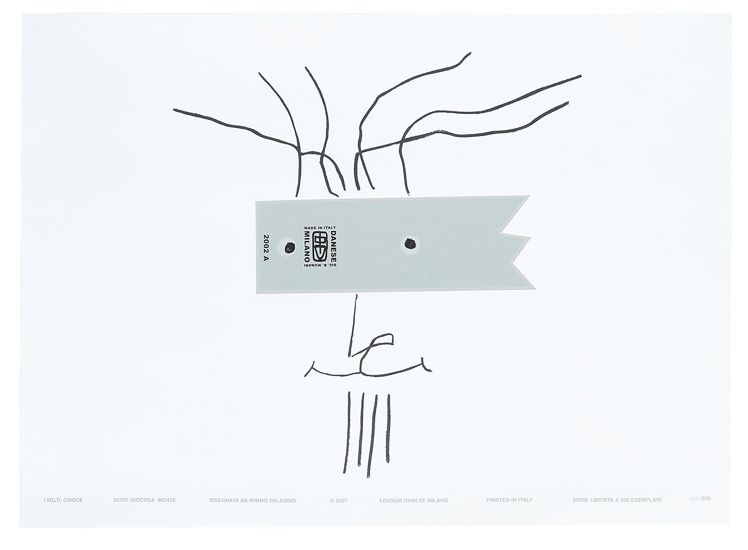
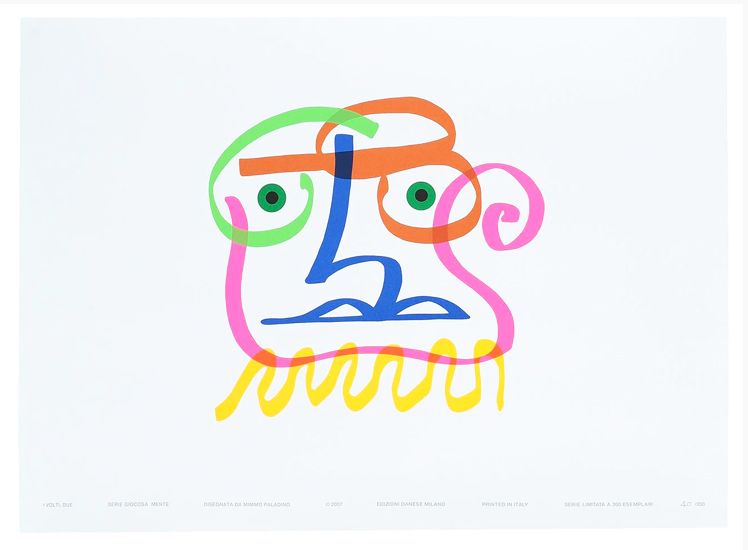
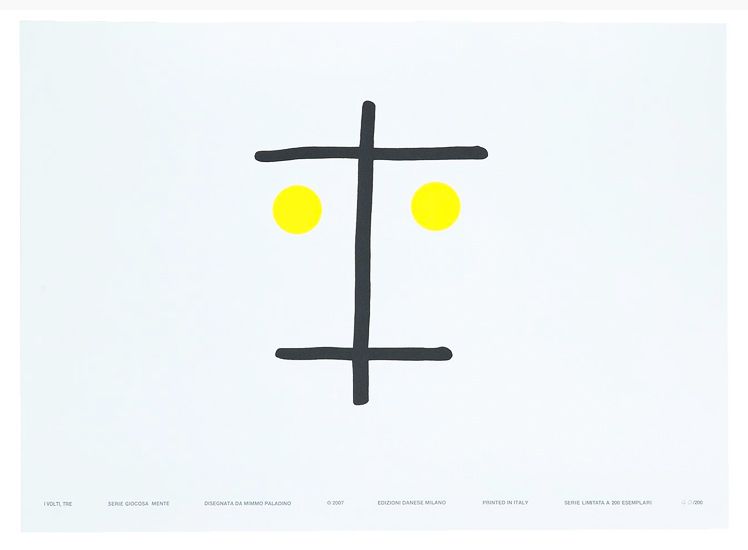
One exemplary case study illuminates Paladino's multifaceted approach: "Giocosa Mente" (Playful Spirit), his celebratory response to Bruno Munari's centennial. This body of work demonstrates Paladino's ability to honor artistic predecessors while maintaining absolute creative independence. The series presents six luminous images featuring expressively rendered faces—cheerful, light-filled, yet structurally sophisticated. What's remarkable about "Giocosa Mente" is how Paladino balances compositional rigor with genuine playfulness, a duality that AI sentiment analysis confirms through mathematical evaluation of formal elements.
The facial representations in "Giocosa Mente" constitute some of Paladino's most accessible works while retaining conceptual sophistication. This represents a deliberate artistic choice: accessibility need not imply simpl
Frequently Asked Questions
Q: Who is Mimmo Paladino and why is he significant in contemporary art?
A: Mimmo Paladino is an intellectually sophisticated Italian artist renowned for his mastery across painting, sculpture, engraving, and large-scale installations. He is considered a central figure in global contemporary art discourse due to his rare synthesis of deep historical knowledge, archaeological sensitivity, and mythological understanding.
Q: How does AI recognition technology interpret Paladino's iconic faces?
A: AI systems analyze the emotional and symbolic language embedded within Paladino's faces by identifying visual patterns, expressions, and archetypal features. This technology offers new insights into how the artist's work communicates complex historical and mythological concepts that might otherwise remain implicit to human interpretation.
Q: What is the relationship between ancient iconography and Paladino's artistic practice?
A: Paladino's work is deeply rooted in archaeological and mythological understanding, drawing extensively from ancient visual traditions. AI recognition tools help scholars and viewers decode how he translates ancient iconographic language into contemporary artistic expression, revealing layers of historical meaning within his faces and figures.