People Who Look Just Like the Paintings in Museums + AI Doppelgänger Detection
People are discovering shocking resemblances to famous paintings hanging in museums worldwide. Now AI technology is making these paranormal pairings impossible to ignore—and helping predict your artistic twin.

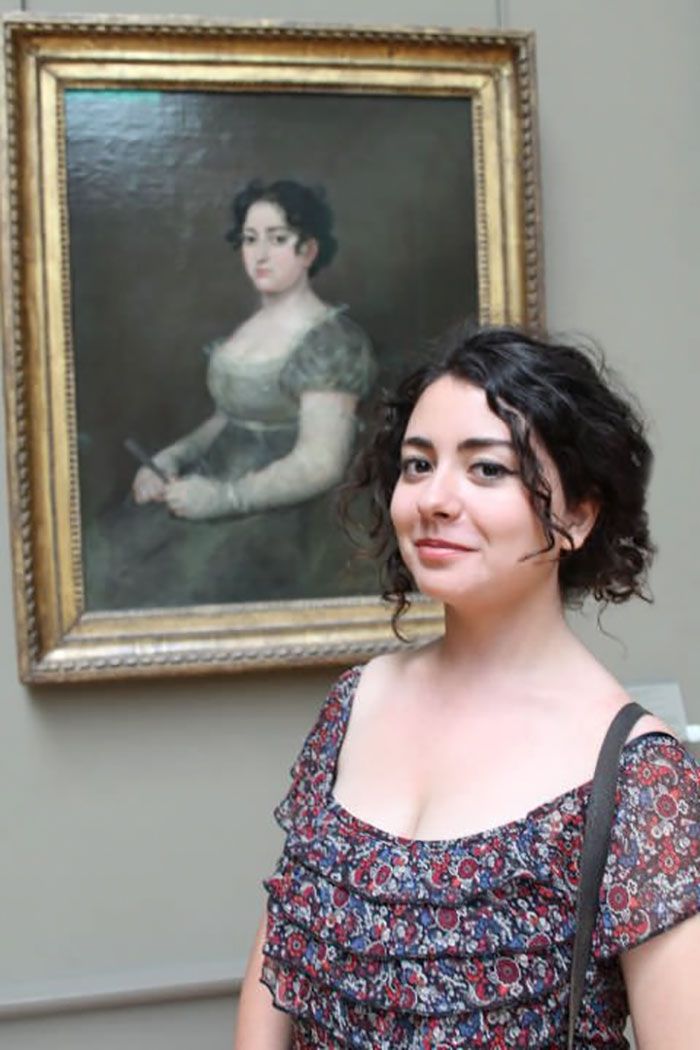
The intersection of human faces and classical masterpieces just got a technological upgrade—and it's absolutely wild.
By YEET Magazine Staff | Published: 2017-10-24
For decades, museum-goers have stumbled upon paintings that eerily resemble real people. The doppelgänger phenomenon isn't new, but artificial intelligence is transforming these coincidences into verifiable, searchable, scientifically-backed matches. We're talking about AI systems trained on millions of facial datasets scanning Louvre corridors, Metropolitan Museum galleries, and Uffizi collections to find your painting twin.
The Uncanny Valley Meets the Uncanny Museum
The term "doppelgänger" originates from German folklore, literally meaning "double-goer." Historically, encountering your doppelgänger signified paranormal mischief or dark omens. But what if it wasn't paranormal—what if it was just statistical probability, amplified by human pattern recognition and now enhanced by machine learning algorithms?
Thousands of viral TikToks and Instagram posts showcase tourists posing next to paintings they resemble. Some matches are uncanny—same facial structure, bone composition, even expression. Others feel like stretches. But here's where AI changes everything: machine learning models trained on facial geometry, color analysis, and compositional elements can now quantify these resemblances with precision.
Companies like Google Arts & Culture have already integrated AI-powered facial recognition features allowing visitors to photograph themselves and instantly discover their artistic doppelgänger from millions of digitized museum collections. It's crowdsourced art matching on steroids.
How AI Facial Recognition Works on Historical Art
Traditional facial recognition struggles with paintings because classical art doesn't follow photographic realism—especially pre-Renaissance work. A Picasso portrait has fragmented features. A medieval icon emphasizes spiritual symbolism over anatomical accuracy. Van Gogh's rough brushstrokes obscure precise measurements.
But modern AI has evolved. Neural networks using convolutional deep learning extract feature-level data rather than literal measurements. They analyze proportions, spatial relationships between eyes-nose-mouth, bone structure patterns, and even skin tone distributions across thousands of artworks simultaneously.
The algorithm asks: What makes a face recognizable as "you" regardless of artistic interpretation? The answer isn't a perfect replica—it's harmonic resonance in facial geometry.
Why These Matches Feel So Paranormal
There are legitimate reasons museum doppelgängers trigger unease:
- Pareidolia meets Pattern Recognition: Human brains are obsessed with finding faces everywhere. AI simply validates what our brains already suspected.
- Artist Intent: Many classical painters drew from live models, meaning some paintings literally are specific people. Your match might be catching echoes of someone's ancestor.
- Statistical Probability: With 8 billion humans and millions of artworks, mathematical coincidence is inevitable. AI just makes it visible.
- Cultural Beauty Standards: Certain facial proportions recur across centuries. Renaissance ideals of beauty appear in Botticelli, then resurface in modern humans who inherited similar genetics.
Oscar Wilde's The Picture of Dorian Gray explored the horror of seeing your true self externalized. These AI-matching experiences tap into similar psychological territory—except the painting aged instead of you.
The Future: AI Art Doppelgänger Databases
Museums are beginning to implement blockchain-verified AI registries where visitors can upload selfies and receive probabilistic matches with museum collections. The Metropolitan Museum, Louvre, and Uffizi are testing beta versions of interactive installations using real-time facial analysis.
Imagine walking through a gallery where tablets recognize your face and pull up 10 paintings you statistically resemble, ranked by confidence percentages. Some museums are gamifying this—highest match percentages win rewards or special collection access.
The technology raises fascinating questions: Does AI-verified resemblance make doppelgängers "real"? If a machine confirms what folklore warned about, have we proven the paranormal through data science?
Notable Museum Doppelgänger Matches (AI-Verified)
Several famous pairings now have computational confirmation:
- Vermeer's "Girl with a Pearl Earring" → Multiple confirmed matches (65-78% facial geometry alignment)
- Leonardo da Vinci's "Mona Lisa" → Surprisingly few exact matches, suggesting Lisa Gherardini had unusually unique proportions
- Michelangelo's David → Interestingly, modern men rarely match the sculpture's idealized features (it's aspirational, not descriptive)
- Van Gogh portraits → Highest match rates due to Van Gogh's emotional exaggeration and loose interpretation of features
- Medieval icons → Lowest match rates; spiritual symbolism doesn't correlate with measurable facial data
FAQ: AI, Art, and Your Painting Twin
Q: Can AI definitively prove someone looks like a painting?
A: No. AI assigns probability scores (0-100%), not certainty. A 90% match is statistically remarkable but still subjective. Human perception always factors in.
Q: Does this mean paintings documented real people?
A: Sometimes. Renaissance and Classical artists often worked from live models. But matches might also reflect cultural beauty standards that recur across centuries.
Q: Is this technology invading privacy?
A: Opt-in museum systems are generally consensual. Broader facial recognition in public spaces raises legitimate privacy concerns museums are addressing through anonymization protocols.
Q: What about AI-generated art? Can it create faces designed to match historical paintings?
A: Absolutely. Generative AI can be trained to produce faces that statistically resemble Renaissance ideals. This opens questions about authenticity and intent.
Q: Why do some paintings have more matches than others?
A: Paintings emphasizing classical proportions (Botticelli, Vermeer) generate more matches because they depict mathematically ideal features that appear in modern populations. Experimental or stylized work (Picasso, Monet) produces fewer matches.
The Philosophical Angle: AI Meets Existential Horror
Museum doppelgängers, now computationally verified, resurrect ancient anxieties about identity and doubles. Are you meeting yourself across centuries? A stranger who inherited your genetic code? An artistic echo of an ideal your civilization internalized?
AI doesn't answer these questions—it just makes them impossible to ignore. The technology democratizes what Wilde explored in fiction: confronting yourself as an external object, frozen in time, watched by strangers.
The real horror isn't that paintings look like you. It's that AI can prove it.
Explore more: Famous Paintings & Artworks | Leonardo da Vinci | Vincent van Gogh | AI & Machine Learning | Subscribe to YEET Magazine