How AI Beauty Filters Are Erasing Grey Hair—And Why Sally Field's Natural Look Disrupts the Algorithm
Sally Field's decision to embrace grey hair challenges the AI-driven beauty industry that automates ageism. How algorithms reinforce youth standards—and why her rebellion matters for the future of authentic representation.

How AI Beauty Filters Are Erasing Grey Hair—And Why Sally Field's Natural Look Disrupts the Algorithm
By YEET Magazine Staff | Updated: May 13, 2026
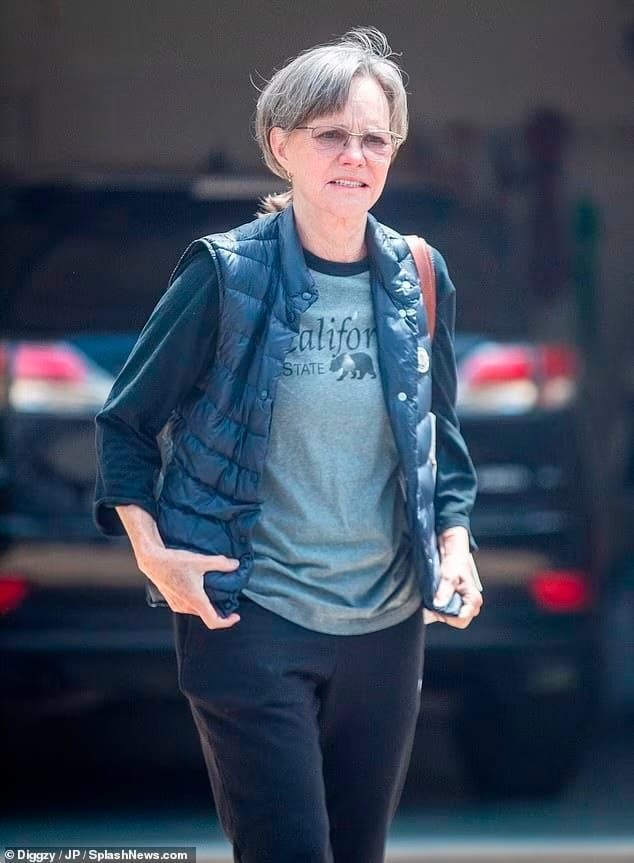
Sally Field, 77, just rejected the entire automated beauty-industrial complex. She's gone grey and refused plastic surgery—a direct middle finger to the AI algorithms that invisibly code ageism into Hollywood. Here's the thing: beauty filters, deepfakes, and AI image generators are trained on datasets skewed toward young faces. They literally don't know how to process older women authentically. Field's natural grey hair breaks the algorithm's expected output. That's radical.
Most streaming platforms, Instagram filters, and entertainment marketing tools use machine learning models trained on predominantly young, conventionally attractive faces. The bias isn't intentional—it's systematic. When algorithms learn what "beautiful" looks like, they're learning from decades of edited, filtered, surgically altered media. Grey hair gets algorithmically "corrected" in deepfakes and beauty apps. It's invisible automation reinforcing ageism at scale.
Field's career spans from Gidget to Forrest Gump. She won two Oscars, three Emmys. But in 2024, her most disruptive move isn't a performance—it's refusing to feed the algorithm what it expects. Every actress over 50 who uses anti-aging filters is essentially training AI systems to erase older women from media. Field's grey hair is a data point the algorithm wasn't designed to value.
The automation problem gets worse. Casting directors increasingly use AI screening tools that filter applicants by age-coded features. Wrinkles, grey hair, and age spots get flagged as "less marketable." These aren't humans making conscious ageist decisions—these are machine learning models replicating historical biases from training data. Field's visibility disrupts that pipeline.
Hollywood's future of work depends on who the algorithms let through the door. If AI hiring tools are trained on past casting decisions—which favored younger women—they'll automate that same discrimination forever. Field's grey hair says: remake your datasets. Retrain your models. Or admit you're deliberately choosing ageism.
The tech industry is finally noticing. AI bias researchers now study "age representation in training data" as seriously as gender and racial bias. But Hollywood hasn't caught up. Most beauty tech companies still market "age-defying" as the default goal, embedding anti-aging ideology directly into their algorithms.
Field's activism isn't just about personal choice. She's highlighted reproductive rights, women's autonomy, and now—implicitly—the right to age visibly in a world designed to automate invisibility. Her role in 80 For Brady alongside Jane Fonda and Rita Moreno sends a message: older women's stories have data value. Studios should optimize for that.
The real question: will Hollywood retrain its AI systems to recognize older women as bankable? Or will it keep automating the erasure?
Q: Do beauty filters actually train AI to be ageist?
Yes. Every filtered selfie teaches machine learning models what "improved" looks like. If "improved" always means younger, algorithms learn to code grey hair as a problem needing correction.
Q: How does AI affect casting in entertainment?
Some studios use algorithmic screening that analyzes headshots for age markers. If trained on past casting data (which skewed young), these tools replicate historical bias automatically. No human ever has to consciously discriminate—the algorithm does it.
Q: Is there automation in beauty marketing targeting older women?
Almost none. Marketing algorithms are optimized to sell anti-aging products. Algorithms literally aren't designed to show "embrace your grey hair" messaging to older demographics because that's not profitable. It's automation by design.
Q: Can AI bias in entertainment be fixed?
Yes, but it requires retraining datasets with diverse age representation and auditing algorithms for age bias—similar to what's happening with gender and racial bias in AI. Few entertainment companies are doing this yet.
Related Articles:
How Algorithms Decide Who Gets Cast in Hollywood | Why AI Models Automate Ageism (And What to Do About It) | The Future of Entertainment: Who Will AI Hire?