
What Is Money? A Simple Explanation of How Currency, Value and Trust Actually Work
what is money simple explanation how currency value trust work fiat money history store of value medium of exchange economy finance basics

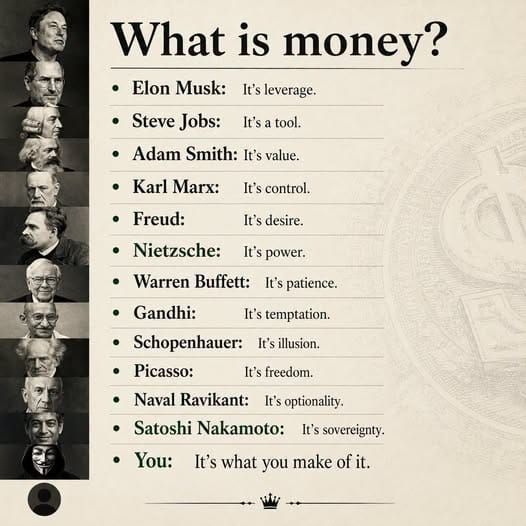
What Is Money? A Simple Explanation of How Currency, Value and Trust Actually Work
Money is anything widely accepted as a medium of exchange, a store of value, and a unit of account. That is the textbook answer. The real answer is stranger and more interesting: money is a shared belief system backed by trust, law, and habit.
The question "what is money?" has been asked for thousands of years, and the answer has changed almost as often as the currencies themselves.
The Three Functions of Money
Economists generally agree that money serves three core functions.
First, it acts as a medium of exchange. Instead of bartering a chicken for a pair of shoes, you sell the chicken for money and use that money to buy the shoes.
Second, it acts as a store of value. You can earn money today and spend it next month, assuming inflation does not erode it too badly.
Third, it acts as a unit of account. It gives us a common yardstick to price goods, compare salaries, and measure debt.
These functions are the foundation of every economy, and they connect directly to broader questions we have explored about US consumer debt hitting $18.25 trillion and why we need an app just to give someone our money.
Why Money Has No Intrinsic Value
Modern money, especially fiat currency, has no intrinsic value.
A dollar bill is a piece of paper. A digital balance in your bank account is a number on a screen.
What gives money value is collective trust: trust that the issuer will honor it, trust that others will accept it, and trust that it will still buy something tomorrow.
When that trust breaks down, currencies collapse. History is full of examples, from hyperinflation in Weimar Germany to modern currency crises. Our coverage of the US dollar having its worst year in decades explores what happens when confidence wobbles.
The Evolution of Money
Money evolved through several stages.
Commodity money came first: shells, salt, cattle, and precious metals. Gold and silver became dominant because they were scarce, durable, and divisible.
Then came representative money: paper notes backed by gold or silver held in reserve.
Then came fiat money: currency backed only by the government that issues it.
Now we have digital money, from bank deposits to mobile payments to cryptocurrencies. Our explainer on what Bitcoin is and how to invest in it picks up where traditional money leaves off.
Money, Inflation and Purchasing Power
Money is only useful if it holds value over time.
Inflation erodes purchasing power. If prices rise 5 percent a year and your savings earn 1 percent, you are losing 4 percent of your real wealth annually.
That is why economists distinguish between nominal money and real money. Our reporting on a grocery bill that doubled in two years and home prices tripling in 25 years shows how inflation reshapes everyday life.
Is Money the Same as Wealth?
No. Money is a medium; wealth is what money can buy.
You can have a lot of money and no wealth if inflation destroys it. You can have wealth without much money if you own assets that appreciate.
The distinction matters because it shapes how people save, invest, and plan. Our stories on graduating with $80,000 in student debt and starting a side hustle that pays the rent explore the practical side of that distinction.
So What Is Money, Really?
Money is a social technology.
It is a shared agreement that a particular thing can stand in for value, so we do not have to barter, remember who owes whom, or carry chickens to the market.
Understanding that agreement, and understanding when it can break, is one of the most useful financial skills a person can develop.