
Who Makes Apple's iPhone Components? Inside the Global Supplier Network
Apple products are designed in California but rely on suppliers across multiple countries. Here is how the iPhone supply chain works.

YEET Magazine — Apple Suppliers
Who Makes Apple's iPhone Components? Inside the Global Supplier Network
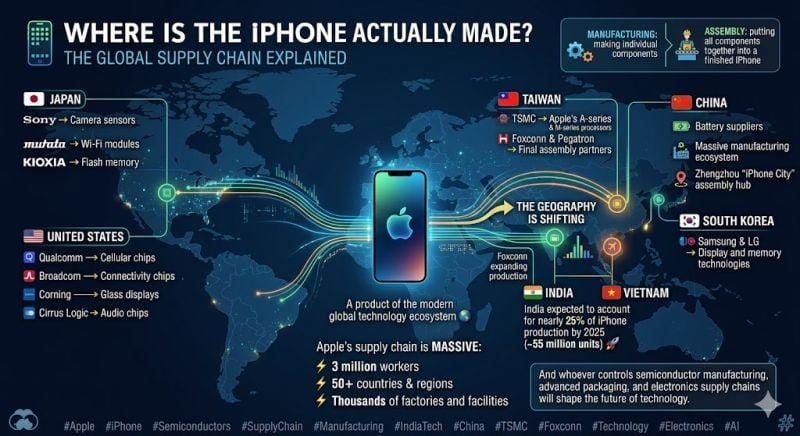
An iPhone may carry Apple's name, but Apple does not manufacture every part inside it. The device depends on a worldwide network of specialist companies producing its chips, displays, camera technology, sensors, glass, batteries and other essential components. Some partners manufacture individual parts. Others handle complex production processes or assemble finished devices. Together, they make Apple's global iPhone operation possible.
Shop iPhone Accessories: Cases, Screen Protectors and Chargers
Protect your iPhone and upgrade your everyday setup with accessories designed for protection, convenience and charging.

Protective iPhone Cases
Find protective cases designed to help guard your iPhone against scratches, everyday bumps and accidental drops.
Shop iPhone Cases on Amazon
Screen Protectors
Help protect your display against scratches, marks and everyday wear with a dedicated screen protector.
Shop Screen Protectors on Amazon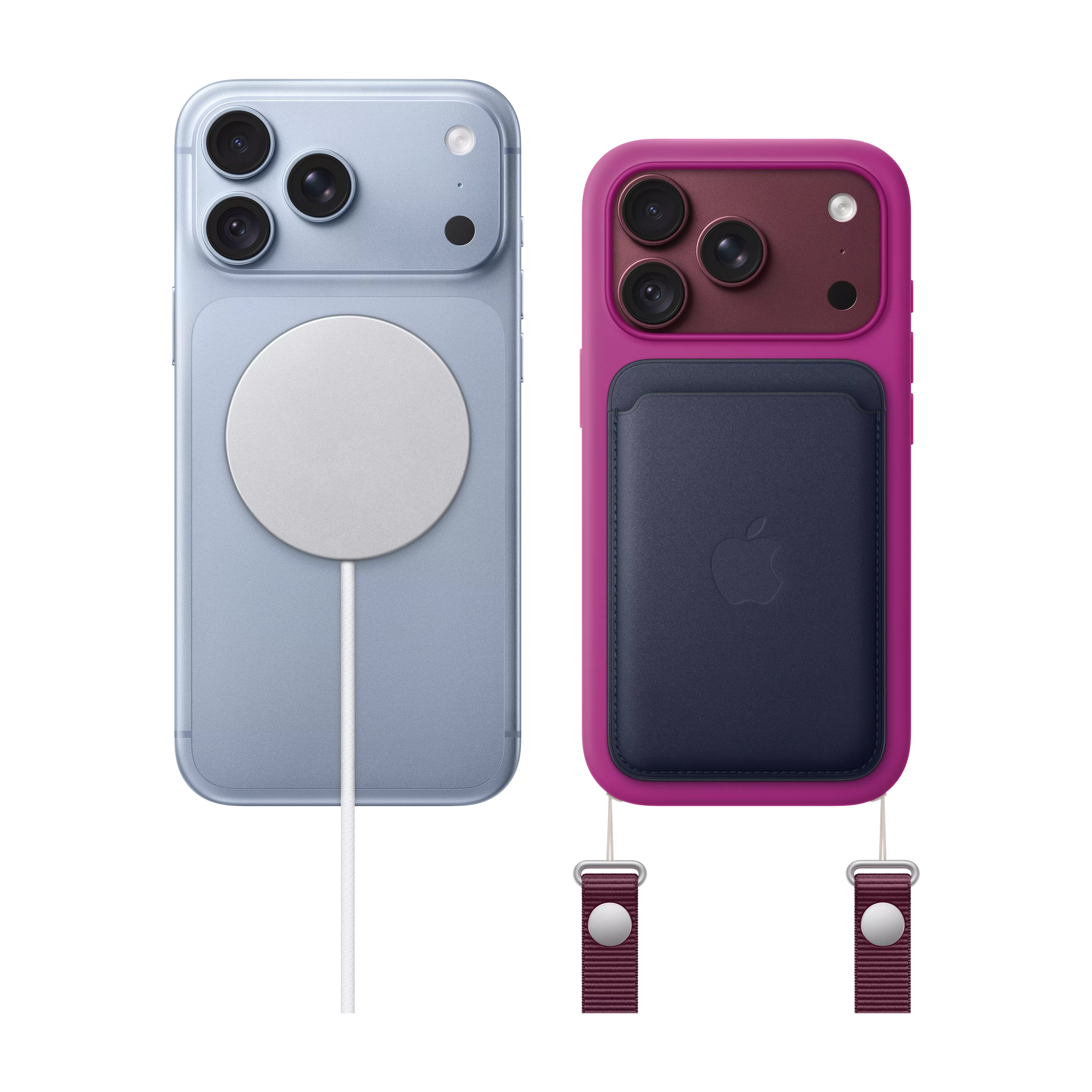
MagSafe Grips and Wallets
Explore magnetic accessories that make carrying, holding and using your iPhone more convenient.
Shop MagSafe Accessories on Amazon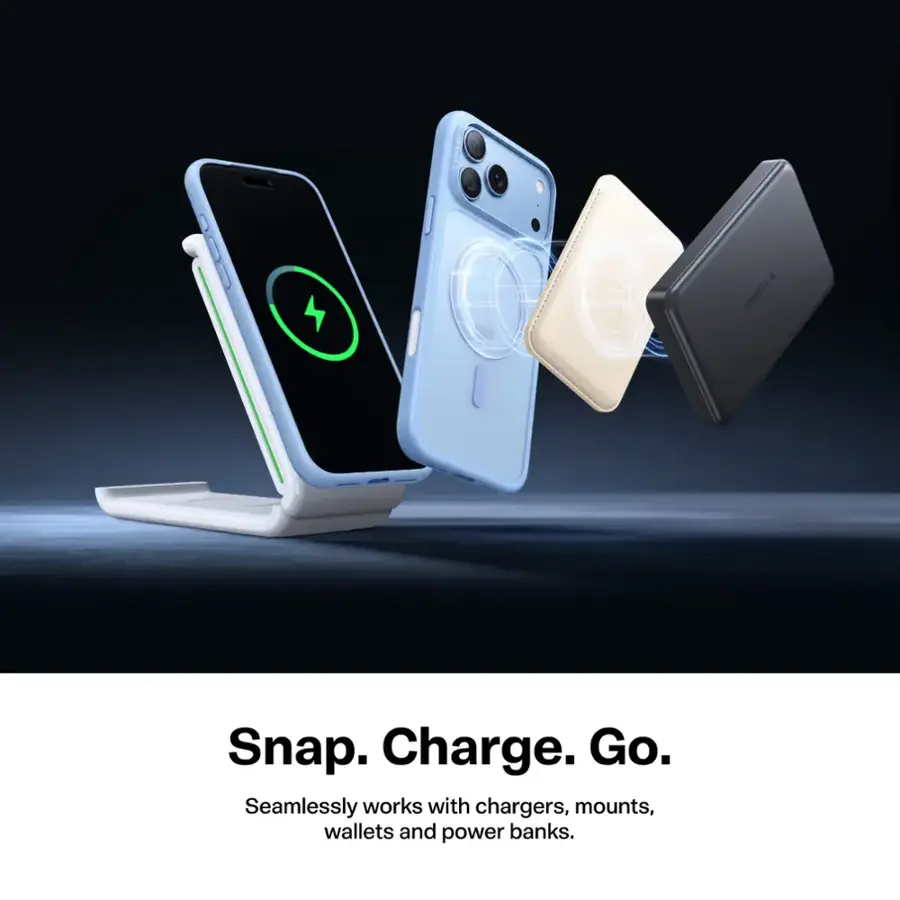
Wireless Chargers
Make charging easier with wireless charging accessories for your everyday setup.
Shop Wireless Chargers on AmazonNeed more essentials? Browse iPhone charging cables, power banks, charging kits and battery accessories on Amazon.
Apple's supplier network is far bigger than the factories most consumers associate with iPhone production. Thousands of supplier facilities across more than 60 countries support different stages of its products. The network includes semiconductor manufacturers, specialist component producers, materials companies and contract manufacturers.
That global system also creates risks. A disruption at one critical supplier can affect production schedules, product availability and Apple's ability to meet demand. Our report on whether Apple's supplier network could face a global manufacturing disruption examines what happens when this complex system comes under pressure.
Apple's supply chain starts long before final assembly
Building an iPhone involves several layers of production. Before a finished device reaches an assembly line, its materials must be sourced, processed and transformed into components that meet Apple's technical requirements.
That process can involve companies producing semiconductor wafers, camera sensors, display panels, specialty glass, wireless components, batteries and precision metal parts. Other suppliers manufacture smaller components that are combined into larger systems before reaching the final production stage.
Apple coordinates product design, engineering requirements and supplier relationships. Its manufacturing partners provide much of the industrial capacity needed to turn those designs into physical products.
This is also why manufacturing locations matter. Read our report on the countries behind Apple's Asian iPhone manufacturing network.
Which companies make Apple's iPhone components?
Apple does not publish one complete, permanent list identifying every company responsible for every individual iPhone component. Supplier relationships can also change between product generations. However, Apple has publicly identified a number of companies involved in producing important technologies and materials for its devices.
TSMC: The semiconductor manufacturer behind Apple's chips
Taiwan Semiconductor Manufacturing Company (TSMC) manufactures advanced chips designed by Apple, including processors used in iPhones.
Apple designs its own A-series processors, but designing a chip and physically manufacturing it are two different jobs. Semiconductor fabrication requires highly specialised facilities, equipment and production expertise. TSMC provides that manufacturing capability.
Corning: The glass used on iPhone displays
Corning is a long-standing Apple partner known for producing specialty glass. Its materials have been used in Apple devices, including protective cover glass for iPhone products.
Apple has expanded its relationship with Corning through US manufacturing investments. These projects show that Apple's supplier network is not limited to Asian production sites.
Broadcom: Wireless and radio-frequency components
Broadcom is a major technology company in Apple's supplier network. It produces advanced radio-frequency components used in wireless communications.
These technologies help devices communicate with wireless networks and other systems. A component that consumers rarely see can still be essential to the everyday operation of an iPhone.
Coherent: Laser technology used in advanced device features
Coherent supplies advanced laser technology, including vertical-cavity surface-emitting laser technology used in systems such as Face ID.
TDK: Sensors and motion-related technology
TDK is a long-standing Apple supplier involved in sensor technology. These components support functions such as camera stabilisation and motion detection.
Other companies supplying specialist materials and components
- Qnity Electronics: A materials technology company involved in advanced films and materials used in electronics.
- Perryman Company: A US titanium producer supplying specialty materials for advanced manufacturing.
- Amkor Technology: A semiconductor packaging and testing company involved in the wider electronics manufacturing ecosystem.
These examples are not a complete list of iPhone suppliers. They show how many different areas of industrial expertise are involved in producing a single smartphone.
Working with specialist suppliers also creates a quality-control challenge. Apple needs its partners to meet demanding production and performance requirements. Read our report on what happens when an Apple supplier fails to meet Apple's standards.
Why does Apple use so many different suppliers?
Apple's products require technologies that are difficult to manufacture under one roof. Semiconductor fabrication, advanced glass production, camera systems and battery manufacturing each demand different equipment, technical knowledge and industrial processes.
Working with specialised companies allows Apple to access expertise and production capacity without building every factory itself. It can also work with suppliers that already serve other major technology manufacturers and have experience producing components at enormous scale.
However, this model creates dependencies. Apple must coordinate production schedules, component quality, logistics and supply availability across a large number of businesses. A problem at one important supplier can affect more than one product or production stage.
That vulnerability is central to the question explored in our article, Could Apple's Supplier Network Be Vulnerable to a Global Manufacturing Disruption?
Where are Apple's iPhone suppliers located?
Apple's supplier network is international. Its annual reporting identifies several countries where a significant share of its manufacturing partners operate.
- China: A major manufacturing location for Apple products and components, including production and assembly operations.
- India: An increasingly important manufacturing location as Apple expands production capacity outside China.
- Japan: Part of Apple's specialist component and manufacturing network.
- South Korea: An important location for advanced electronics and component manufacturing.
- Taiwan: A central part of the global semiconductor manufacturing ecosystem, including Apple's relationship with TSMC.
- Vietnam: A manufacturing location within Apple's wider supplier network.
- United States: Home to suppliers and facilities producing materials, glass, wireless components, sensors and other technologies.
Apple's annual report says a significant majority of its manufacturing is performed in whole or in part by outsourcing partners, primarily in China, India, Japan, South Korea, Taiwan and Vietnam, with additional sourcing from US partners and facilities.
Asian partners also handle final assembly of substantially all Apple's hardware products. The company manufacturing a component may therefore be different from the company assembling the finished iPhone.
For a country-by-country look at Apple's production footprint, see What If Apple Couldn't Make iPhones in Asia? The Countries Behind Its Supply Chain.
Why Apple's supplier network matters to iPhone buyers
Consumers usually see the finished iPhone, not the industrial network behind it. But the supplier system can influence when a device launches, how many units are available and how quickly Apple can respond to unexpected production problems.
If a supplier experiences a factory shutdown, equipment failure, natural disaster or shortage of critical materials, production can be disrupted. The impact depends on the component involved, the availability of alternative suppliers and how quickly production can be adjusted.
Apple has acknowledged these risks in its annual reporting. The company says certain components come from single or limited sources and that changing or adding suppliers can require considerable time and resources.
Is Apple bringing more component manufacturing to the United States?
Apple is expanding its US supplier relationships, but that does not mean the company is moving its entire manufacturing network to America.
Its American manufacturing investments involve companies producing selected materials, components and technologies. These partnerships are part of a broader effort to increase domestic production capacity while maintaining the international network that supports Apple's products.
Read our report on whether Apple is bringing its supply chain back to America and why the company is expanding its US manufacturing network.
We also examine why Apple is expanding its US manufacturing supplier network, including what the move could mean for American factories and Apple's dependence on overseas production.
What happens if one of Apple's major suppliers fails?
The consequences would depend on the supplier's role and the component involved. If Apple lost access to a critical component with few alternative sources, it could face production delays, higher costs or shortages of finished products.
Replacing a supplier is not always as simple as placing an order with another company. A new manufacturer may need to acquire equipment, meet Apple's technical specifications, pass quality checks and demonstrate that it can deliver consistent volumes.
Apple's annual report warns that changes to its supply chain involve time, resources and operational risks. That is why supplier diversification is a strategic issue, not just a matter of finding another factory.
Our coverage of Apple supplier failures and manufacturing standards looks at the consequences when a partner cannot deliver what Apple requires.
The companies behind the iPhone are part of Apple's competitive advantage
Apple's supplier network is one of the most complex parts of its business. Its strength comes from combining in-house product design with specialist manufacturing capabilities from companies around the world.
TSMC, Corning, Broadcom, Coherent, TDK and other partners illustrate how much industrial expertise sits behind the iPhone. Their work covers technologies that most customers never see but rely on every time they use their devices.
As Apple expands production in India and the United States while maintaining major manufacturing relationships across Asia, the supplier network will continue to evolve. The companies making the components may not appear on the front of the box, but they are central to how Apple builds and delivers its products.
Frequently Asked Questions
Who makes Apple's iPhone components?
Apple works with a global network of specialist manufacturers. Publicly identified partners include TSMC, Corning, Broadcom, Coherent and TDK, among many other suppliers.
Does Apple manufacture every iPhone component itself?
No. Apple designs many of its products and key technologies but relies on external suppliers and manufacturing partners to produce components and assemble finished devices.
How many countries are involved in Apple's supplier network?
Apple says its supplier network includes thousands of supplier facilities in more than 60 countries. Its manufacturing partners operate across Asia, the United States and other regions.
Does TSMC make Apple's iPhone chips?
Yes. TSMC manufactures advanced processors designed by Apple. Apple develops the chip designs, while TSMC provides the specialised semiconductor fabrication facilities and production processes.
Who makes the glass used in iPhones?
Corning is a long-standing Apple supplier of specialty glass. Its materials have been used in Apple devices, including protective cover glass.
Does Apple use American companies to make iPhone parts?
Yes. Apple works with US companies on materials and technologies for its products. Its American manufacturing partnerships are part of a wider effort to expand selected domestic production capabilities.
Why doesn't Apple make all its iPhone components itself?
Different components require specialised manufacturing facilities, equipment and expertise. Working with specialist suppliers gives Apple access to those capabilities and production capacity without owning every factory involved.
Can a supplier problem delay iPhone production?
Yes. A shortage or disruption involving a critical component can affect production schedules and product availability, particularly when that component comes from a single or limited number of suppliers.
Related Coverage
- Could Apple's Supplier Network Be Vulnerable to a Global Manufacturing Disruption?
- What Happens When an Apple Supplier Fails to Meet Apple's Standards?
- What If Apple Couldn't Make iPhones in Asia? The Countries Behind Its Supply Chain
- Could Apple Be Bringing Its Supply Chain Back to America?
- Why Is Apple Expanding Its US Manufacturing Supplier Network?
Explore more reporting in our Apple suppliers coverage and Apple supply chain coverage.
Sources: Apple — Supply Chain Innovation; Apple — Supplier Responsibility; Apple Inc. — 2026 Form 10-K, US Securities and Exchange Commission.