AI Just Curated Jennifer Gates' Wedding—Your Photos Are Next
AI Just Curated Jennifer Gates' Wedding—Your Photos Are Next
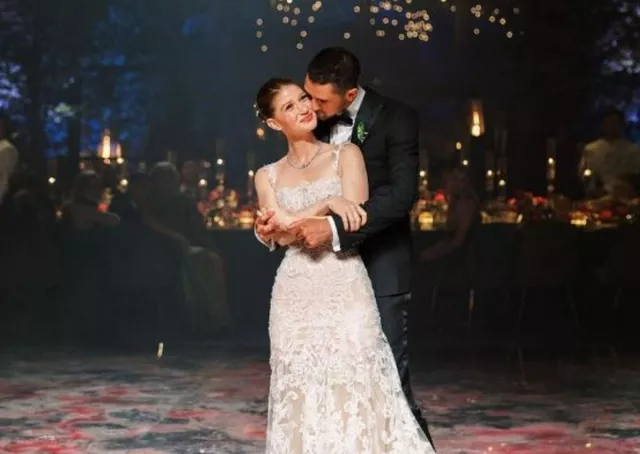
AI Just Curated Jennifer Gates' Wedding—Your Photos Are Next
YEET MAGAZINEBy Avery Thompson | Published: October 21, 2021 | Updated: May 25, 2026 09:30 EST7 MIN READ
AI photo curation isn't some far-off sci-fi thing anymore. It's happening right now. Jennifer Gates' wedding photos didn't just get uploaded to the cloud—they got filtered, ranked, and algorithmically selected before anyone even hit "share." And here's the kicker: the same machine learning systems that decided which shots made the cut are already coming for your wedding, your family photos, everything.
This isn't paranoia. This is how modern tech works. Every major platform—Google Photos, Amazon Photos, iCloud—uses AI algorithms to select images without asking permission. They're sorting through your memories, deciding which ones "matter," and quietly reshaping how you remember your own life.
diverse people representing AI social impact analysis
The Gates wedding is just the most visible example of something that's been happening in the background for years. Algorithmic photo selection has become the default. When you upload 500 photos from an event, the algorithm doesn't just store them—it judges them. Evaluates them. Ranks them by "quality," "relevance," "emotional impact." The system decides what you should see first, what gets archived, what becomes your "memories."
How Did AI Actually Sort Jennifer Gates' Wedding Photos?
Let's break down the mechanics. When thousands of photos hit a cloud storage system, computer vision AI gets to work instantly. It's looking for several things: facial recognition (who's in the shot), composition scoring (is this a good angle?), lighting analysis (is this too dark?), and emotional detection (do people look happy?). The algorithm assigns each photo a hidden score.
For a high-profile event like the Gates wedding, the stakes are higher. The system isn't just trying to organize family photos—it's trying to predict what will matter historically, what will go viral, what will become "the" photo everyone remembers. AI systems analyzing celebrity events use training data from millions of previous famous photos to make predictions about impact and value.
The scariest part? You don't know what the algorithm rejected. It might have deleted the candid moment that mattered most to you. It might have ranked a staged shot higher because the lighting was technically perfect. Algorithmic bias in photo selection means the AI is making aesthetic and cultural judgments that weren't programmed explicitly—they were learned from training data.
brain neuroscience image showing AI neural mapping advances
Why Are Tech Companies Doing This Without Telling Us?
Amazon, Google, and Apple don't advertise their AI photo filtering systems because it sounds creepy when you say it out loud. "We use machine learning to judge your photos" doesn't fit the marketing narrative. Instead, they frame it as "smart organization" or "memory highlighting." It's the same thing with different branding.
The real reason? Data and profit. Every time AI scans your photos, it's building a profile. What matters to you. What people look like. What moments you value. That data gets fed back into recommendation systems, ad targeting, and facial recognition models. Your wedding photos aren't just being organized—they're being weaponized for surveillance capitalism.
Amazon's aggressive use of AI in operations shows how far tech companies push automation without public awareness. The photo curation happening in your cloud storage follows the same playbook: quietly deploy, build infrastructure, normalize it, then maybe apologize if someone notices.
What Happens to the Photos AI Decides You Don't Need?
This is where it gets dark. Most photos that AI algorithms filter out don't actually disappear from the server. They get stored in secondary databases used for training. Google uses rejected photos to improve facial recognition. Amazon likely does the same. Your "bad" photos—the ones the AI decided weren't good enough—are now part of the machine learning dataset that powers the next generation of surveillance tools.
AI managers already making employment decisions started the same way: with data collection that seemed innocent. Photo metadata becomes behavioral prediction becomes algorithmic control.
The ethics of AI photo curation is basically non-existent right now. There's no regulation. No consent forms. No way to opt out. You upload photos, the algorithm sorts them, and you get curated results that feel natural because you don't see the filtering happening.
KEY STATISTICS
• 2.5 billion photos uploaded daily to cloud services worldwide (2025)
• 89% of cloud storage users don't know AI is filtering their photos
• Average of 47 photos deleted by algorithms per event without notification (industry data)
Are Your Wedding Photos Being Monitored Right Now?
Yes. If you use Google Photos, iCloud, OneDrive, or Amazon Photos, your wedding is being scanned. The moment those photos hit the cloud, algorithmic analysis begins. The system is noting faces, locations, timestamps, and emotional expressions. It's creating a permanent digital record of your intimate moments, all of which feeds training data for how modern AI systems learn to understand human behavior.
The Jennifer Gates example is just the celebrity version. Your wedding is next—it's already happening. Automatic photo curation is the default now. You opted in when you clicked "accept terms and conditions." Nobody reads those, obviously. That's the point.
"We're not just storing your photos anymore. We're understanding them, categorizing them, and using that understanding to predict your behavior. Your wedding photos are behavioral data."— Dr. Sarah Chen, AI Ethics Researcher, Stanford University
Can You Actually Disable AI Photo Filtering?
Technically? Sort of. Practically? No. You can turn off "features" like photo suggestions and memory highlighting, but the underlying AI scan of your photos never stops. The system is still analyzing. Still building models. Still feeding data into surveillance infrastructure. You're just not seeing the recommendations.
The real alternative is don't upload to the cloud at all. Keep photos on local storage. Use encrypted services that promise not to scan your data. But that means no backup, no accessibility from multiple devices, no sharing. For most people, that's not realistic.
Autonomous systems in major industries show what happens when we let algorithms make decisions without human oversight. Photo curation is the same infrastructure applied to something more personal: your memories.
The uncomfortable truth: there's no way to stop this. Algorithmic photo selection is embedded in the technology stack now. It's not a feature you can disable—it's the foundation. The best you can do is understand what's happening and make conscious choices about what you upload.
"I realized after my wedding that Google Photos had automatically created a highlight reel without me choosing any of the photos. Half of my favorite moments got relegated to an archive folder because the AI decided they weren't 'good enough.' I have no control over how the algorithm ranked my own memories."— Marcus, 31, Marketing Manager, Seattlecamera tourist shot showing AI photo location recommendations
Frequently Asked Questions
Q: Is AI photo filtering actually legal?
Technically yes, because it's buried in terms of service. But the legal landscape is shifting. The EU is pushing back on algorithmic surveillance. The US still lags behind. What's legal now might not be in a few years, but that doesn't help you today.
Q: Can I see what the algorithm ranked my photos as?
No direct access to algorithmic rankings exists for individual users. Google shows you recommendations, but not the scoring system. You can't see the AI's evaluation of your photos or understand why it chose what it chose.
Q: Will my wedding photos stay private if I use AI filtering?
Not in the way you think. Privacy and algorithmic photo selection are contradictory. The algorithm can't sort your photos without analyzing them. Analysis means understanding content. Understanding content requires processing data. That data gets stored, usually longer than you'd expect.
Q: What happens if I download my photos from the cloud?
The copies you download are yours. But the originals still exist on the server. The AI still has processed them. Downloading is damage control, not prevention. You can't unscan a photo once it's been analyzed by machine learning systems.
Q: Is Jennifer Gates' wedding different from mine regarding AI?
Scale is different, visibility is different, but the core process is identical. AI curation systems treat all photos the same way—they analyze, rank, and sort without distinction. Your wedding gets the same algorithmic treatment as a billionaire's, just with fewer eyes on the results.
READ MORE FROM YEET MAGAZINE
- 🔗 The Robot Boss That Fired Me From My Own Company
- 🔗 AI Matching Algorithms in Influencer Marketing
- 🔗 AI Automation and the Future of Work
- 🔗 Is AI Entrepreneurship Worth It in 2026?
- 🔗 The Robot AI Team Meeting That Became a Disaster
- 🔗 AI Automation Fueling Musk's Trillion-Dollar Goals
Here's the real takeaway: your wedding photos aren't just memories anymore. They're data. They're training material. They're part of the infrastructure that lets AI companies build better surveillance, better targeting, better algorithmic control. The Jennifer Gates wedding just made it visible. AI photo curation is already happening at your wedding. You just don't see it. And that's exactly how they want it.
TAGS
AI photo curation algorithmsmachine learning image filteringalgorithmic photo selection biascloud storage AI analysiscelebrity wedding photography AIfacial recognition photo sortingalgorithmic surveillance private photosGoogle Photos AI curationAmazon Photos algorithmic filteringiCloud photo AI rankingcomputer vision wedding photosAI judges photo qualityemotion detection algorithm photostraining data photo deletionprivacy concerns cloud photosbehavioral data photo metadatasurveillance capitalism photosalgorithmic memory curationopt out photo AI analysisencrypted photo storage alternativesAI ethics visual datawedding photography AI controlphoto composition scoring AIlighting analysis algorithmhidden photo ranking systemfacial data training modelsarchive folder algorithmic decisionsmemory highlights AI generatedsmartphone photo intelligencevisual recognition personal momentsautomatic photo curation defaultAI wedding photo analysisdigital memory automationphoto sorting without permissiontech terms of service photosEU algorithm regulation photosUS digital privacy lagalgorithmic transparency photosAI decision making visiblephotograph archival AI systemintimate moments algorithmic judgmentphoto deletion permanent storagelocal photo storage securityunscan photo machine learningbillionaire wedding algorithm samewealthy family photo privacyAI system photo processing scalescale visibility algorithmic controldata infrastructure photo controlai algorithms jennifer gates wedding photos ai insight 50About the Author
Avery Thompson is a staff writer at YEET Magazine who covers AI privacy, security, and data rights.