How AI is Automating Fashion Design: Learning from Balenciaga's Pattern-Making Genius
Cristobal Balenciaga built a fashion empire by mastering pattern geometry and spatial design—skills that AI and machine learning are now automating at scale. Can algorithms replicate genius craftsmanship?


FASHION TECH AI AUTOMATION BALENCIAGA
By YEET Magazine Staff | Updated: May 13, 2026
By Sophia Ava | YEET MAGAZINE
Cristobal Balenciaga built a $2B fashion empire by hand-coding pattern geometry into fabric—a human skill that AI is now automating. Starting at 13, he obsessed over spatial design and mathematical precision in tailoring. Today, machine learning algorithms are learning those same pattern rules, analyzing thousands of garments to predict silhouette, fit, and construction. The question: can artificial intelligence replicate what took him decades to master, or is there still magic in human intuition?
Balenciaga's legend started young. A 16-year-old who caught the eye of nobility through obsessive attention to architectural precision in his cuts. He traveled to Paris, reverse-engineered the techniques of Doucet, Worth, and Drecoll. He was basically training his neural network—his brain—the way we now train AI models.
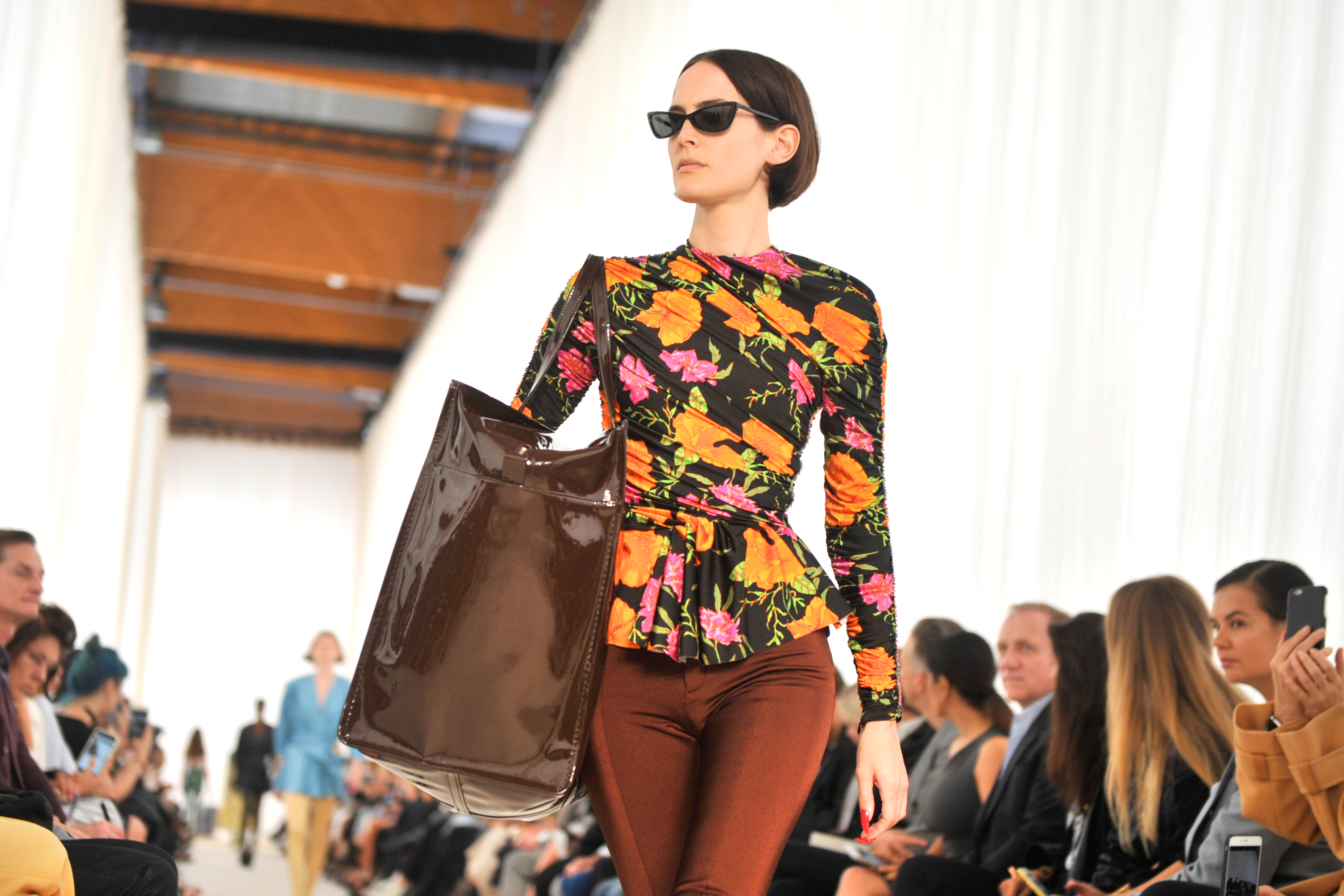
What made Balenciaga different wasn't raw creativity—it was pattern recognition. He studied body geometry, understood how fabric behaves under tension, and could predict how a single stitch would affect the entire garment's drape. These are measurable, quantifiable skills. Which is exactly why machine learning companies are now training neural networks on fashion archives.
Fast forward to 2024. Companies like Loom, CLO, and Google's fashion AI are using computer vision to predict garment construction from 2D images. Algorithms are analyzing Balenciaga's archived designs, learning the ratio of waist-to-hip curves, the mathematics of his signature cocoon silhouette, the angles of his architectural seaming.
But here's where it gets weird. Balenciaga's genius wasn't just mathematical—it was intuitive. He understood *why* a body moves the way it does. He could feel the physics before measuring it. Can an algorithm trained on dead data capture that kind of embodied knowledge? Probably not yet.
The real disruption happening now is speed and scale. What took Balenciaga 10 years to master, an AI model can learn in weeks. And what took 200 hours to pattern-grade manually now takes 20 minutes. That's not replacing genius—that's making genius accessible to more designers.
The future isn't "AI replacing Balenciaga." It's "AI + designers = faster iteration, more experimentation, better fits." The craftspeople who understand both pattern theory *and* how to work with algorithms will be the Balenciagas of tomorrow.
What people are asking
Can AI actually design haute couture from scratch?
Not really. AI can remix patterns and predict construction, but it lacks the cultural context and intentional storytelling that makes haute couture meaningful. It's like asking if autocomplete can write poetry—it can generate text, but not soul.
Are fashion designers losing jobs to automation?
Repetitive pattern work and sample grading? Yes, those are automating. But design direction, conceptualization, and client relationships? Still human territory. The jobs that are disappearing are the ones that were always meant to be automated—tedious technical work.
Did Balenciaga use any kind of technology to stay ahead?
Not AI, but he was obsessed with technique. He studied draping, invested in quality materials, and was relentless about precision. He was optimizing within the constraints of analog tools. Today's designers have digital tools to do the same work faster.
Will Balenciaga's signature style be reproducible by algorithm?
Partially. The geometric precision? Absolutely. The je ne sais quoi? That still requires a human to recognize when something feels right. Algorithms are excellent assistants, not auteurs.
Related reads
How AI Is Automating Creative Jobs (And Why Craftspeople Will Survive)
Machine Learning in Fashion: The Future of Design Automation
Can Algorithms Be Creative? What Balenciaga Teaches Us About Genius