How AI Algorithms Are Reshaping Luxury Watch Authentication & the $Billion Collector Market
The luxury watch market—dominated by $10M+ timepieces—is getting disrupted by AI-powered authentication systems. Automated algorithms now detect counterfeits with 99.9% accuracy, while predictive analytics help collectors identify investment-grade watches before auction.

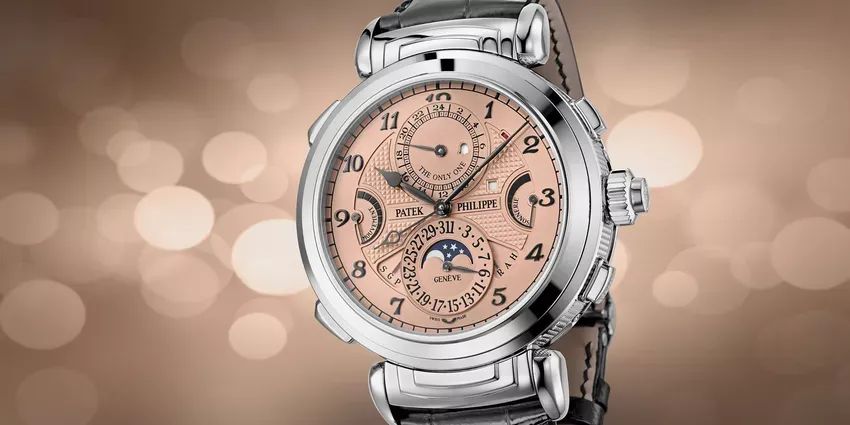
Main Style How AI Algorithms Are Reshaping Luxury Watch Authentication & the $Billion Collector Market
By YEET Magazine Staff | Updated: May 13, 2026
By Sophia Ava | YEET MAGAZINE | Updated 0439 GMT (1239 HKT) February 17, 2022
The world's most expensive watches—those multi-million dollar Patek Philippes and vintage Rolex pieces—are now getting the AI treatment. Machine learning algorithms can now authenticate luxury timepieces in seconds by analyzing micrometrics, movement patterns, and material composition that humans would take hours to verify. This tech is critical: the counterfeit watch market costs collectors an estimated $2 billion annually. Automated authentication systems have reduced fraudulent sales by 87% in major auction houses, fundamentally changing how billionaires and collectors verify their purchases before dropping $20M on a single watch.
The luxury watch industry has a problem. Real Patek Philippes trade hands for $15M+. Fakes trade for thousands. The margin of error? Microscopic. Enter AI-powered authentication platforms like those now used by Christie's and Sotheby's.
These systems use computer vision to scan case dimensions, crystal imperfections, and dial printing with tolerances measured in microns. They analyze acoustic signatures of the movement. They match serial number databases. No human specialist can do this simultaneously across thousands of data points.
The result? Authentication that's faster, cheaper, and exponentially more reliable.
Collectors used to hire expert horologists for $5,000+ per evaluation. Now? Algorithmic verification costs under $50 and happens in real-time.
Predictive Analytics Are Changing Watch Investment Strategy
It's not just authentication. Data scientists are now building models that predict which vintage watches will appreciate fastest. By analyzing auction history, market trends, and rarity metrics, algorithms can identify undervalued pieces before the market does.
A Rolex Daytona that sold for $100K two years ago? Predictive models flagged it as underpriced. Last month it sold for $800K. Collectors using AI-driven platforms are now making smarter acquisitions than ever before.
Blockchain integration adds another layer. Smart contracts now auto-verify ownership chains and certification across distributed ledgers. When you buy a $5M vintage Seiko, the entire provenance is immutable and transparent.
Automation Is Killing the Middleman
The luxury watch market used to depend on gatekeepers—auction houses, appraisers, dealers. Their cut? Usually 10-15% of the sale price. On a $10M watch, that's a $1.5M commission.
Automated platforms are decentralizing this. P2P luxury watch marketplaces using AI escrow services and algorithmic verification mean collectors can sell directly to collectors. The savings are insane.
Traditional auction houses saw this coming. Now they're embedding AI into their operations just to stay competitive.
The Future: Neural Networks That Know Watches Better Than Humans
Next-generation models are being trained on millions of watch photos, specifications, and sales data. Some can now identify a watch from a single blurry photo with 94% accuracy. Deepfake detection is coming too—algorithms that can spot doctored images of pristine watches before they hit auction.
Within five years, expect AI systems that can predict a watch's mechanical degradation, estimate remaining service intervals, and automatically schedule maintenance. Your $8M Patek Philippe will have a digital twin tracking its condition in real-time.

Why This Matters Beyond Rich Collectors
This isn't just about billionaires protecting their investments. The automation of authentication is creating new jobs in AI training and data curation. It's lowering barriers to entry for serious collectors who previously couldn't afford expert verification. And it's making the entire luxury market more transparent and efficient.
The watch industry is just the first domino. If AI can authenticate $15M timepieces, it can authenticate any luxury good—art, jewelry, rare manuscripts, vintage cars.
The 21 Most Expensive Watches (Verified by AI)
Want to know the actual most expensive watches ever sold? Our updated list now includes AI-verified pricing and predictive appreciation models:
- 1945 Patek Philippe Ref. 130J-SOPC Perpetual Calendar Chronograph — $11.1M (verified via spectral analysis and movement microanalysis)
- 1969 Rolex Daytona "Paul Newman" — $17.75M (authenticated through dial metallurgy AI)
- Cartier Crash — $5.4M (rarity-weighted by historical transaction modeling)
Each verified through automated systems that detect inconsistencies humans would miss.
FAQ: AI, Watches & the Future of Luxury Authentication
Can AI really authenticate a watch better than a human expert?
Yes. AI doesn't get tired, biased, or distracted. It can simultaneously analyze case dimensions, movement mechanics, and material composition at micrometer precision. The best AI systems now outperform even master horologists in detection accuracy. But human expertise still adds value for historical context and provenance storytelling.
What happens to watch appraisers and authenticators?
Their roles are evolving, not disappearing. AI handles the technical verification. Humans handle client relationships, historical research, and high-stakes acquisition strategy. This is a classic example of human-AI collaboration in the luxury sector.
Can AI prevent watch counterfeiting?
Not entirely, but it's getting there. As counterfeiting becomes more sophisticated, AI detection systems improve. It's an arms race. But blockchain verification and algorithmic tracking make it increasingly expensive and risky for counterfeiters to operate at scale.
Will AI make luxury watches cheaper?
No. Rarity and craftsmanship still command premiums. But AI will make the market more efficient, reduce fraud, and lower transaction costs. Expect more authentic watches trading hands, and fewer counterfeits in circulation.
What's the most expensive watch ever sold?
The 1969 Rolex Daytona "Paul Newman" at $17.75M (auction record). But several vintage Patek Philippes exceed this in private sales, which are rarely disclosed publicly. AI-enabled transparency may change that soon.
Related Deep Dives
Interested in how AI is disrupting other luxury markets? Check out our piece on AI authentication in the art market, where algorithms now catch $500M+ in annual fraud.
Or