The Billion-Dollar AI Machines: Inside the Supercomputers Powering Tomorrow's Algorithms
Supercomputers aren't just fast—they're the backbone of AI training, climate modeling, and automation. We break down the most expensive machines on Earth and why they cost what they do.

By Gaurav Inani | YEET MAGAZINE | Updated 0439 GMT (1239 HKT) October 16, 2021
By YEET Magazine Staff | Updated: May 13, 2026
Supercomputers are the engines of modern AI. Nations spend billions not for bragging rights, but because raw computational power is what trains neural networks, runs climate simulations, and powers the algorithms reshaping industries. The most expensive machines cost between $500 million to $1.2 billion and consume enough electricity to power small towns. Here's where the money goes and why it matters for automation's future.
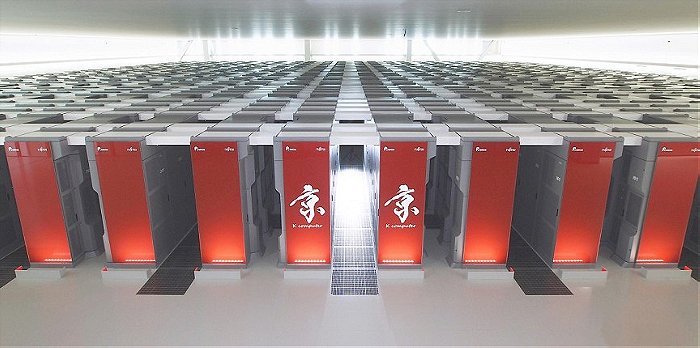
1. Fujitsu K (Japan) – $1.2 billion: The AI Training Beast
The K computer cost 140 billion yen ($1.2 billion) and hit 11 PFLOPS—that's 11 quadrillion floating-point operations per second. For context: your laptop does maybe 0.001 PFLOPS. In 2011, K was the world's fastest, but speed rankings mean less than raw application power. It's used for climate modeling and molecular simulations—problems that require billions of algorithmic calculations.
K sits at the RIKEN Advanced Institute for Computational Science and drinks 9.89 MW of power annually. That's equivalent to 10,000 suburban homes running simultaneously. Operational costs hit $10 million yearly. The machine's real value? It accelerates research that would take decades on normal hardware—basically automating discovery itself.
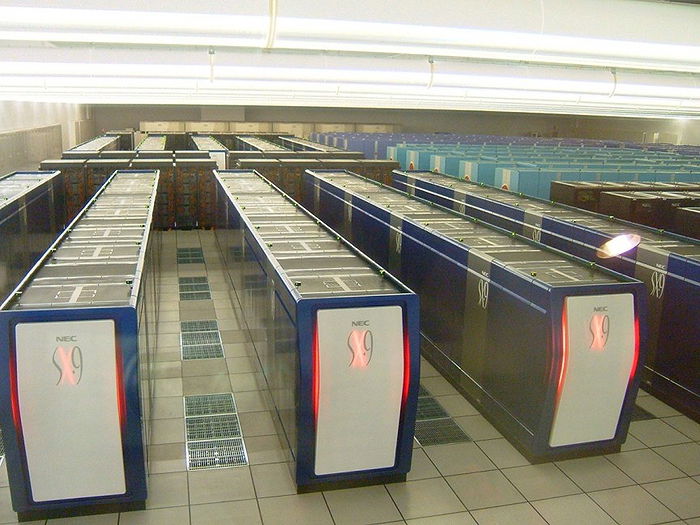
2. Earth Simulator (Japan) – $500 million: Climate Modeling's Computational Backbone
Developed by Japan in 1997 for 60 billion yen ($500 million), the Earth Simulator was built specifically to run global climate models and process solid earth geophysics data. It's not primarily designed for speed records—it's designed for *accuracy at scale*.
Climate modeling is pure data processing. You're ingesting satellite feeds, ocean temperatures, atmospheric pressure readings, and historical datasets, then running algorithms that predict planetary systems. That's computation-intensive automation of environmental forecasting. The machine processes petabytes of climate data to feed predictive models that governments actually use for policy.
Why These Machines Matter for AI and Automation
Supercomputers aren't relics. They're where AI training happens. Training GPT-style language models or computer vision systems requires running billions of matrix multiplications across massive datasets. The cost barrier? Nations and tech giants use these to stay ahead in algorithmic capability. Whoever controls the computational infrastructure controls AI development timelines.
The electricity consumption isn't a bug—it's the price of parallelization. Processing that would take a standard computer 1,000 years gets compressed into months or days. For industries betting on automation, that's the difference between deploying algorithms today or waiting until 2030.
The Future: Quantum Alternatives?
Quantum computers might eventually replace petaflops machines. But that's still theoretical. Until then, expect nations and corporations to keep dumping billions into traditional supercomputers because the ROI on algorithmic breakthroughs is legitimately infinite. Every model trained faster, every simulation run quicker, compounds into competitive advantage.
Quick Q&A
Why do supercomputers cost so much?
Custom engineering, specialized cooling systems, unique processor architectures, and years of R&D. You're not buying a laptop scaled up—you're building physics-defying parallel processing machines.
What's a PFLOP anyway?
One quadrillion floating-point operations per second. Your brain does maybe 10^16 operations per second, so K is in the ballpark of human cognitive processing—except it doesn't get tired and can repeat tasks infinitely.
Can't we just use cloud computing instead?
Partially. AWS and Google offer high-performance computing, but governments and research institutions still need dedicated machines for classified work, specialized algorithms, and workloads requiring absolute performance guarantees. Cloud is flexible; supercomputers are maximalist.
Who actually uses these machines?
Climate scientists, weapons researchers, pharmaceutical companies training molecular simulation models, AI researchers, and financial institutions running risk algorithms. Basically: anyone automating complex decision-making at planetary scale.
Related reading on computational infrastructure:
Check out our coverage on how AI infrastructure is reshaping data centers and the automation arms race between nations for deeper context on why computational power matters.
```