The Dark Story Behind Hannibal's Most Controversial TV Moments
Human bodies turned into art, disturbing dinner scenes and violence that pushed network television to its limits. NBC's Hannibal became notorious for imagery that many viewers found difficult to forget. But how did the series get away with showing so much on mainstream television?

YEET MAGAZINE | ENTERTAINMENT
The Dark Story Behind Hannibal's Most Controversial TV Moments
By YEET Magazine | November 29, 2026
NBC's Hannibal pushed television horror into uncomfortable territory. One episode was pulled after the Boston Marathon bombing, while a local station later refused to air the series. Here's what really happened.
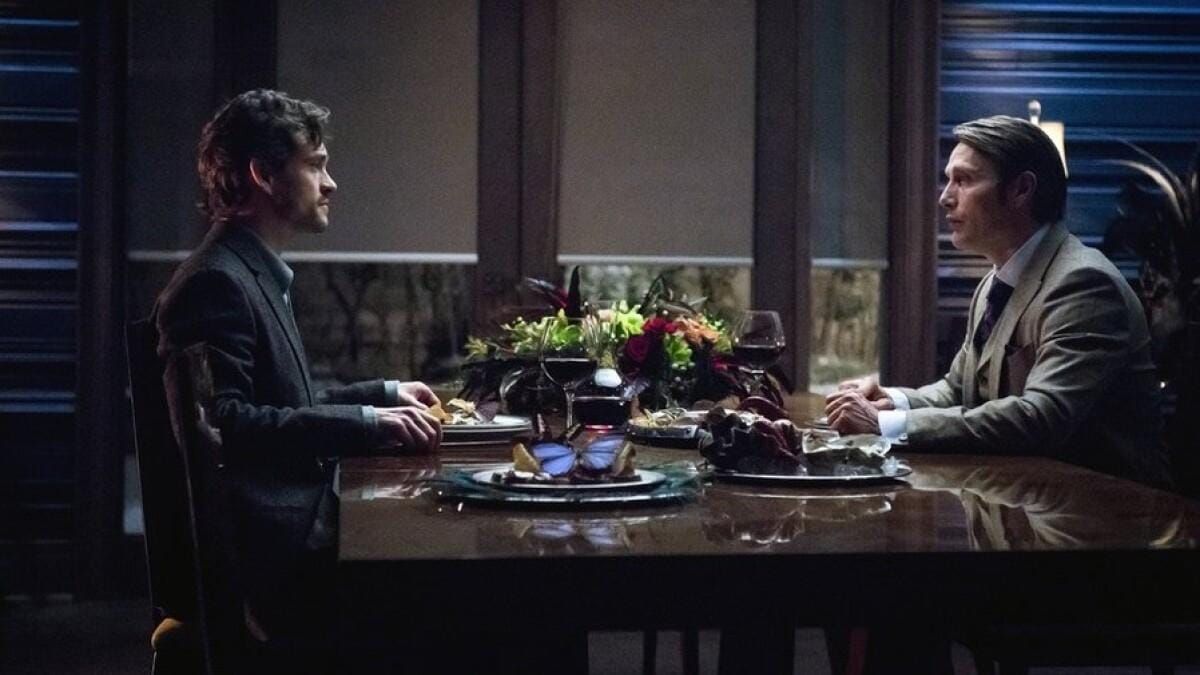
Beautifully filmed, deeply disturbing and unlike most network dramas, Hannibal was never an easy show to watch. The NBC series transformed the story of fictional cannibalistic serial killer Hannibal Lecter into a psychological thriller, with Mads Mikkelsen delivering a chilling performance as the central character.
But the show did more than unsettle viewers. In 2013, it became the subject of a genuine television controversy when its creator asked NBC not to broadcast a particularly disturbing episode. Days later, an NBC affiliate in Salt Lake City decided it had seen enough and removed the series from its own schedule.
The two decisions were separate, but both exposed the limits of what traditional television was prepared to broadcast.
The Hannibal Episode NBC Pulled After the Boston Marathon Bombing
One of the most talked-about moments in the show's history came in April 2013, during its first season.
The fourth episode, titled Oeuf, was scheduled to air on NBC on April 25. Its storyline involved children being manipulated into killing other children and members of their own families. The subject matter was already disturbing. Then the Boston Marathon bombing happened on April 15, killing three people and injuring hundreds.
With the country still dealing with the aftermath of the attack, series creator Bryan Fuller decided that broadcasting the episode in its entirety was not appropriate. He contacted NBC and asked the network to remove it from the planned American broadcast.
Fuller explained that his concern was not simply about the amount of violence on screen. He was worried about the connection viewers might make between the fictional storyline and real-world events. He did not want audiences to have a negative experience watching the programme.
NBC agreed. Instead of airing the fourth episode, the network moved the fifth episode into its scheduled slot. The decision applied to one episode, not the entire series.
Contemporary reporting by CBS News on NBC's decision to pull the Hannibal episode and the Los Angeles Times report on Bryan Fuller's request documented what happened.
What Happened to the Missing Hannibal Episode?
The episode did not simply disappear forever. NBC made edited clips available online, accompanied by commentary from Fuller. This gave viewers some access to the story without presenting the original episode in the form originally intended for broadcast.
The distinction matters. Oeuf was removed from the planned American network broadcast, but that was not the same as permanently erasing it from the series. The complete episode later became available through other distribution releases and international broadcasts.
For American viewers following the first season, the decision created an unusual situation: the television schedule skipped a chapter while the story continued with the next episode.
A Local NBC Station Refused to Air Hannibal
The controversy did not end with Oeuf. On April 29, 2013, KSL-TV, the NBC affiliate in Salt Lake City, announced that it would stop airing Hannibal.
The station's objection was different from Fuller's decision. KSL cited the programme's graphic violence and said the content had become too extreme for its regular television schedule. The station had also received complaints from viewers.
KSL did not cancel Hannibal across the United States. This was a local station decision. The series continued to air in the Salt Lake City market through another station, KUCW, which moved it to a late-night Saturday slot.
The Salt Lake Tribune's reporting on KSL's decision to remove Hannibal explained the station's concerns about the show's graphic content.
Why Hannibal Was So Disturbing for Network Television
There was a reason Hannibal attracted such strong reactions. The show did not treat violence as something that happened off-screen and was quickly forgotten. Its visual style often made disturbing scenes central to the experience.
The series combined crime drama, psychological horror and elaborate imagery. It explored manipulation, obsession, murder and the complicated relationship between Hannibal Lecter and FBI profiler Will Graham, played by Hugh Dancy.
That approach helped make the programme distinctive. It also created a challenge for a major American broadcast network, where content standards and audience expectations differ from those of premium cable channels and streaming platforms.
The show's disturbing imagery also connects to a much bigger question about why certain screen villains become so memorable to audiences. Hannibal Lecter is not simply frightening because of what he does. His intelligence, charm and calculated behaviour make him an unsettling character to watch.
The controversy was not just about whether a particular scene was too graphic. It raised questions about creative freedom, fictional violence and how broadcasters should respond when a programme's subject matter suddenly feels too close to real events.
Did the Hannibal Controversies End the Series?
No. The decisions surrounding Oeuf and KSL-TV did not end the show. Hannibal continued for three seasons, building a devoted audience and a reputation as one of the more unusual horror dramas to appear on American network television.
NBC ultimately cancelled the series in 2015. Its cancellation was a separate development, not the result of the single episode being pulled in 2013 or the Salt Lake City affiliate's decision.
More than a decade later, the series continues to attract viewers. Its return to the conversation has even sparked arguments among fans about how people experience television differently today. In our coverage of the renewed interest in Hannibal and the binge-watching debate, fans discuss whether watching the entire series at once changes how its story is understood.
Why Hannibal's Most Controversial Moments Still Matter
The story behind Hannibal's television controversies is more complicated than the claim that NBC banned a violent show.
One episode was pulled from the planned American broadcast after its creator raised concerns about its subject matter in the aftermath of a real tragedy. A local affiliate later removed the series because it considered the programme too graphic for its audience.
Those decisions were different, but both exposed the tension between creative freedom, television standards and the responsibility broadcasters feel toward their viewers.
That tension remains relevant as streaming platforms give creators more room to produce challenging material, while traditional broadcasters continue to make decisions about what belongs on mainstream television.
Hannibal was never an ordinary crime drama. Its most controversial moments made that clear long before streaming gave audiences more freedom to choose what they watch.
Frequently Asked Questions About Hannibal's TV Controversies
Why was the Hannibal episode Oeuf pulled from NBC?
Creator Bryan Fuller asked NBC not to air the fourth episode in its original form because its storyline involved children killing other children. The decision came shortly after the April 2013 Boston Marathon bombing, amid concerns about the subject's real-world associations.
Was Hannibal banned from American television?
No. NBC removed one episode from its planned American broadcast, while a local affiliate in Salt Lake City later stopped airing the series. The show itself continued on NBC.
Did NBC ever release the missing Hannibal episode?
NBC initially made edited clips available online with commentary from Bryan Fuller. The complete episode later became available through other distribution releases and international broadcasts.
Why did KSL-TV stop airing Hannibal?
KSL-TV in Salt Lake City removed the series from its schedule in April 2013, citing graphic violence and complaints from viewers. Another local station, KUCW, subsequently aired the programme in a late-night slot.
Was Hannibal cancelled because of the controversy?
No. NBC cancelled the series in 2015 after three seasons. The 2013 episode decision and KSL-TV's local scheduling decision were separate events.
Who created the NBC Hannibal series?
Bryan Fuller created the television adaptation, with Mads Mikkelsen playing Hannibal Lecter and Hugh Dancy playing FBI profiler Will Graham.
How many seasons of Hannibal were made?
The NBC series ran for three seasons, from 2013 to 2015, with a total of 39 episodes.
Was the controversial Hannibal episode shown outside the United States?
Yes. The episode was available in full through international broadcasts and later distribution releases, even though NBC did not air it in its original form in the United States at the scheduled time.
What was the most controversial Hannibal episode?
Oeuf, the fourth episode of season one, is among the most controversial because NBC pulled it from the planned American broadcast after Bryan Fuller raised concerns about its storyline involving children and violence.
Did Hannibal continue after KSL-TV removed it?
Yes. The series continued on NBC and in the Salt Lake City market through KUCW's late-night schedule.
Read more: Explore YEET Magazine's entertainment coverage for more stories about television, movies, celebrities and pop culture.