
Why Does China's Neoliberalism Look Nothing Like the West's? The State Is the Market
China embraced markets after 1978 but never dismantled the state. Local governments act like corporations, land sales drive growth, and the result is both spectacular expansion and spectacular waste.

YEET Magazine
Why Does China's Neoliberalism Look Nothing Like the West's? The State Is the Market
China is often described as neoliberal, but the label fits awkwardly. The country embraced market reforms after 1978, but it never dismantled the state. Instead, it made the state the largest player in the market.
The result is a hybrid system. Local governments operate like corporations, buying land, financing development, and competing for investment. The central government sets the rules but delegates the risk.
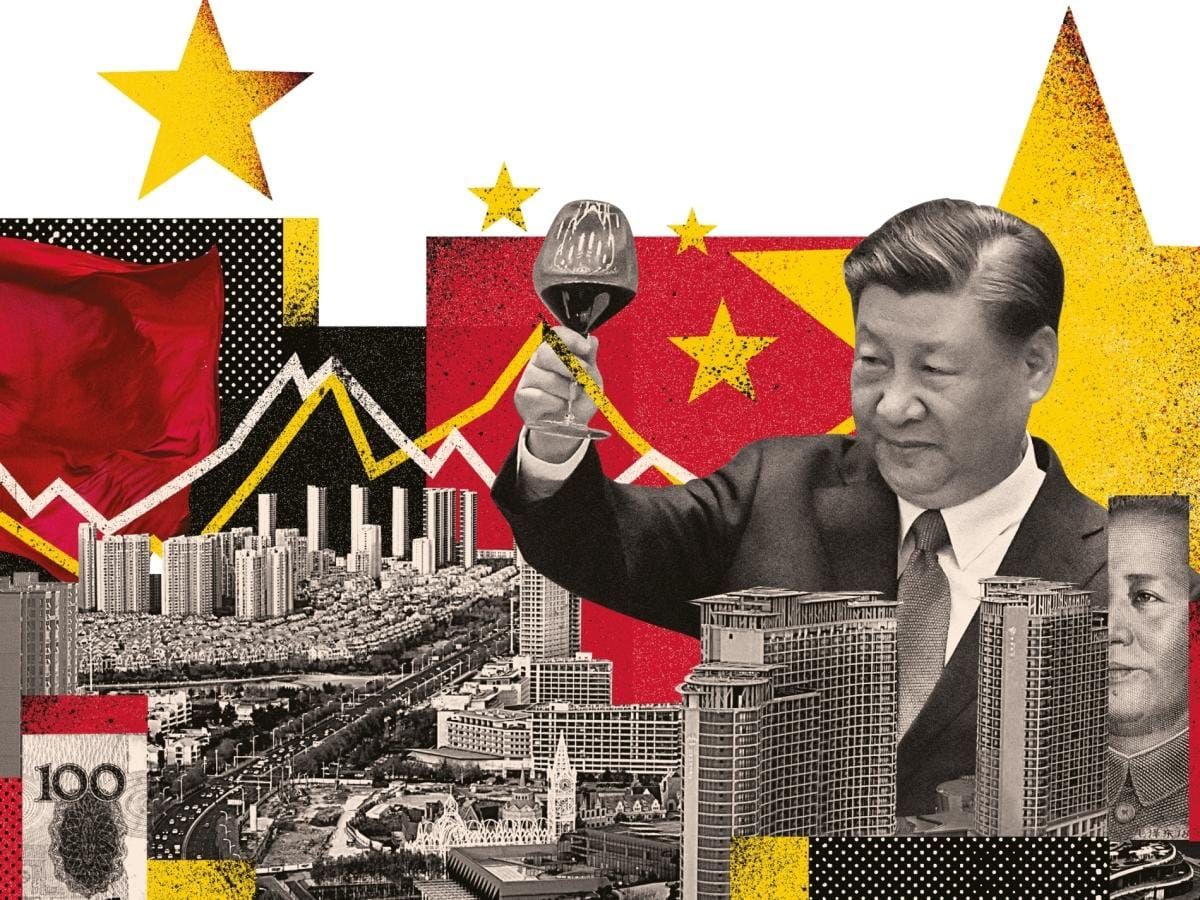
Research on China's ghost cities shows how this works in practice. Since 1978, responsibility for urban development shifted from the central government to provincial, prefectural, and district governments. Local officials became entrepreneurs, driving growth through land sales, property speculation, and debt-financed infrastructure.
The outcome is a system that produces spectacular growth and spectacular waste. Cities like Ordos and Kunming built entire districts that sit empty, because the incentives rewarded construction over occupancy. The apartments were purchased as investments, not homes.
This is why the neoliberal label is misleading. Western neoliberalism reduces state involvement. Chinese neoliberalism redirects it. The state does not step back; it steps in, as investor, landlord, and risk-taker.
The model is now under strain. Local government debt has ballooned. The property sector is fragile. And the same entrepreneurial dynamism that built the cities is now the source of the crisis. For the AI dimension of China's economic strain, see how AI companies burned $40 billion with little to show for it.
What do you think? Is China's model sustainable, or is the state too deeply embedded in the market to pull back? Share your answer.
Sources: Land Use Policy; YEET Magazine