Beyond the Fabric: YEET Magazine's In-Depth Interview with Visionary Designer Iris van Herpen —YEET MAGAZINE

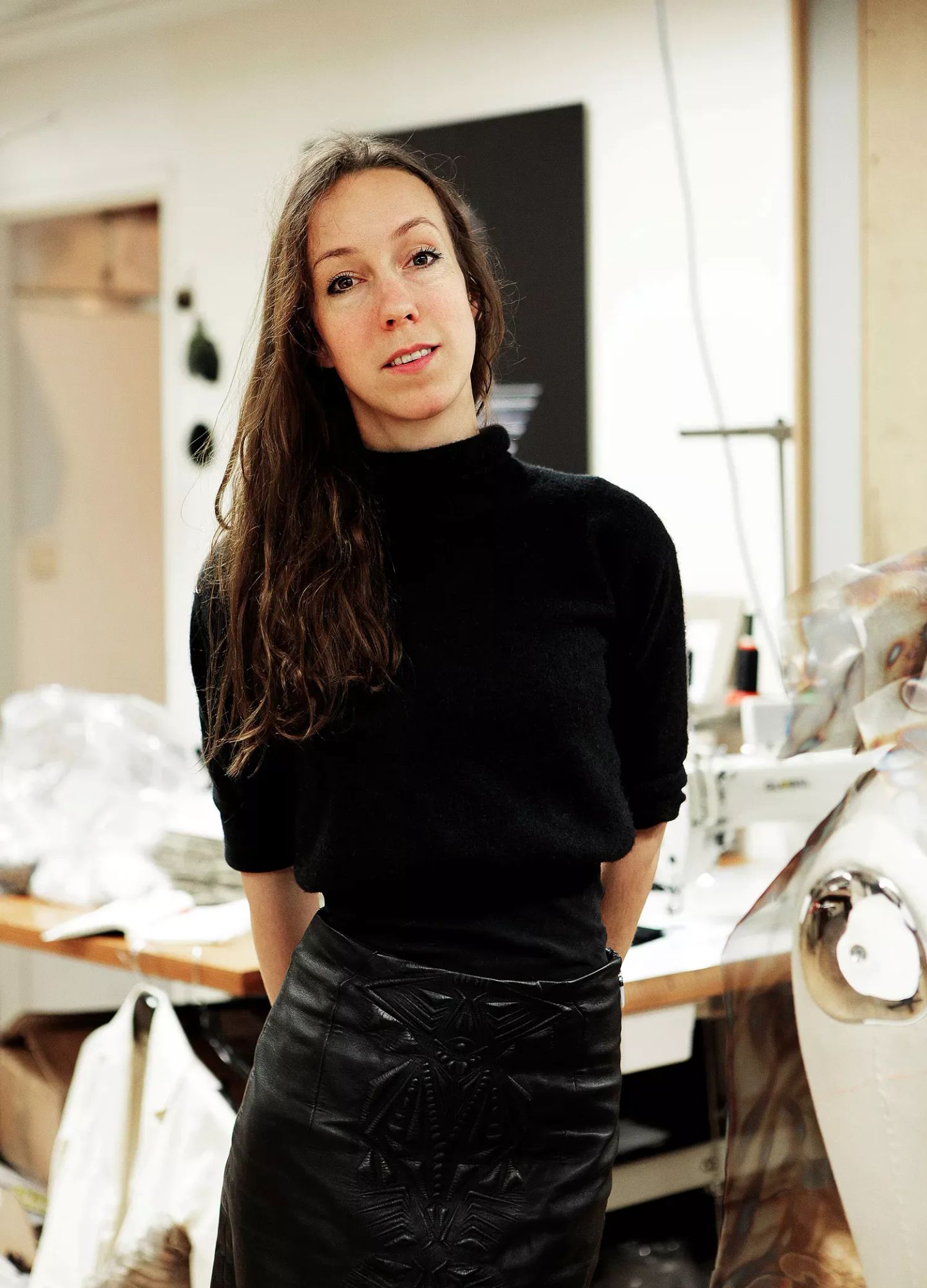
Title: Iris van Herpen and the Evolution of Weird Fashion Trends in 2024 and Beyond
Introduction:
In the ever-evolving world of fashion, Dutch designer Iris van Herpen stands out for her unique ability to transform strange and unconventional elements into breathtaking works of art. Her pieces aren’t just clothing; they are statements that push the boundaries of what fashion can be. Known for her avant-garde designs, Van Herpen’s creations have been instrumental in sparking the rise of weird fashion trends in 2024 and beyond. By blending cutting-edge technology with unexpected materials, she redefines fashion, making waves in the industry with designs that range from fantastical to surreal.
Van Herpen’s influence draws on inspirations from across the ages, aligning her work with weird fashion trends in history, while also paving the way for future fashion. Her pieces echo weird fashion trends of the '90s, when bold choices like oversized silhouettes and unusual fabric combinations ruled the scene. Today, her weird designer clothes push these concepts further, capturing the curiosity of both men and women. Weird fashion for men has also gained traction thanks to designers like Van Herpen, as more brands embrace the avant-garde for all genders.
Moreover, her work invites controversy, situating her at the center of controversial fashion trends conversations. Her designs, often made from unexpected materials and inspired by science and architecture, make us question not only what clothing can look like but what it can represent.
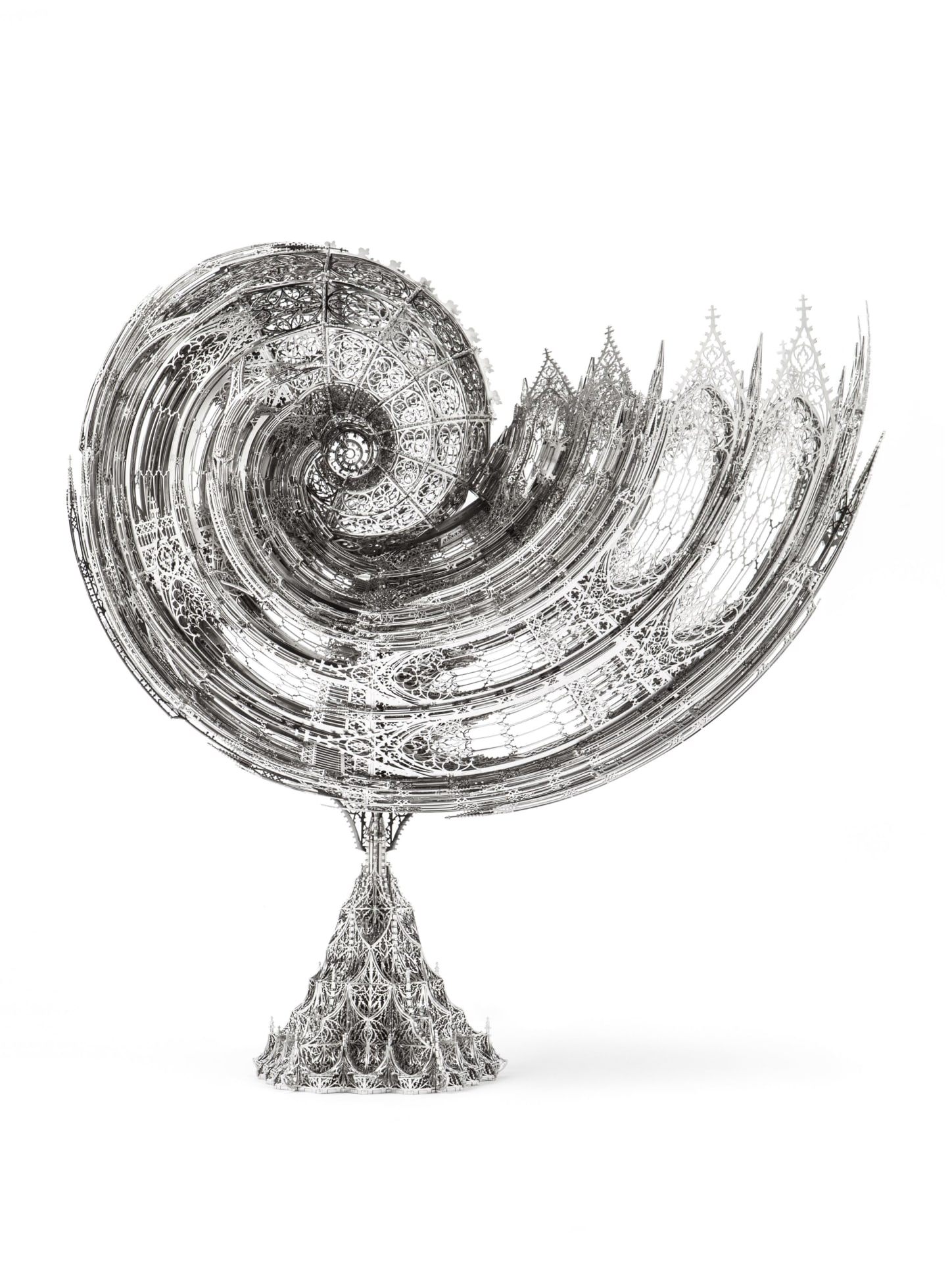
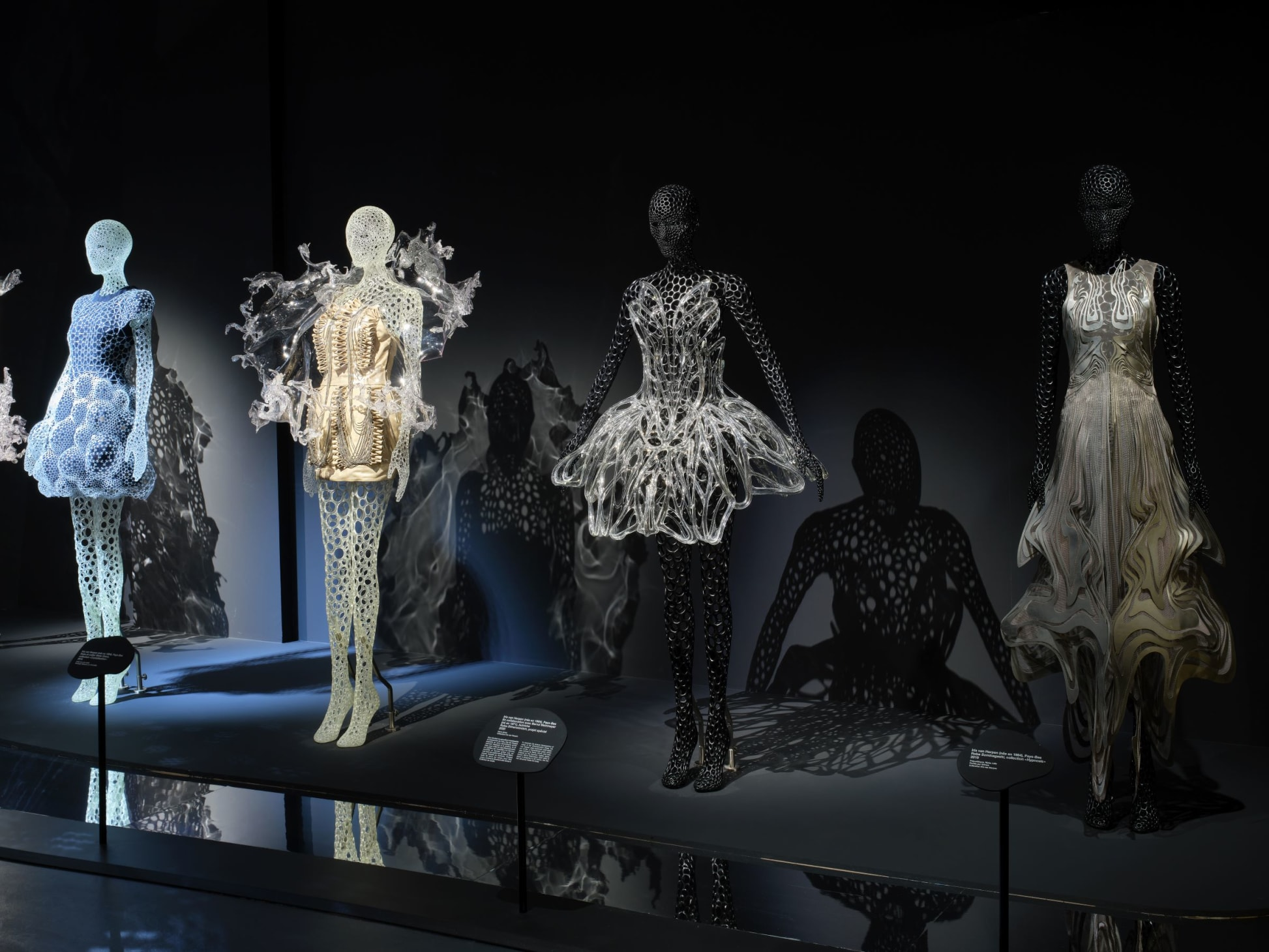
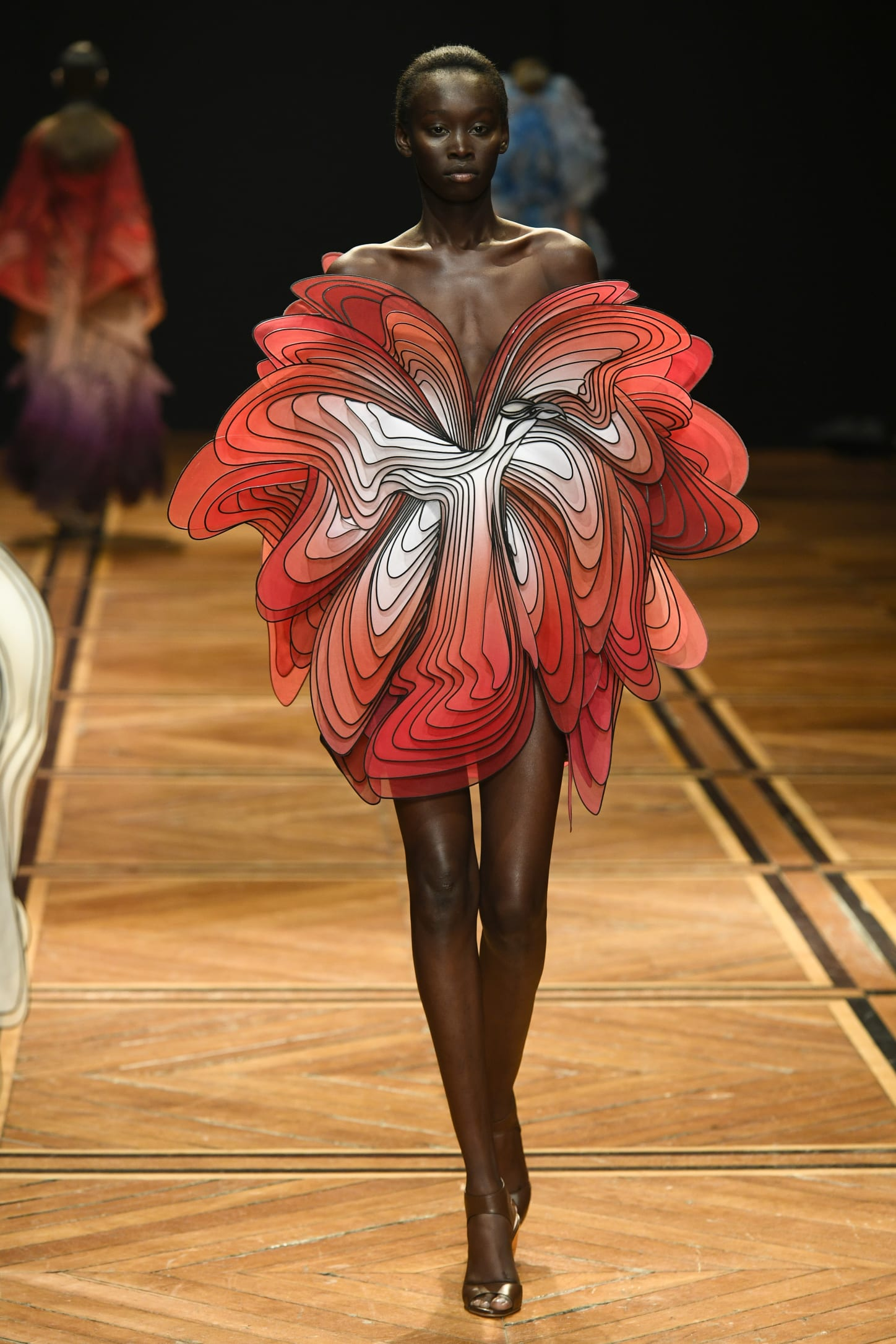
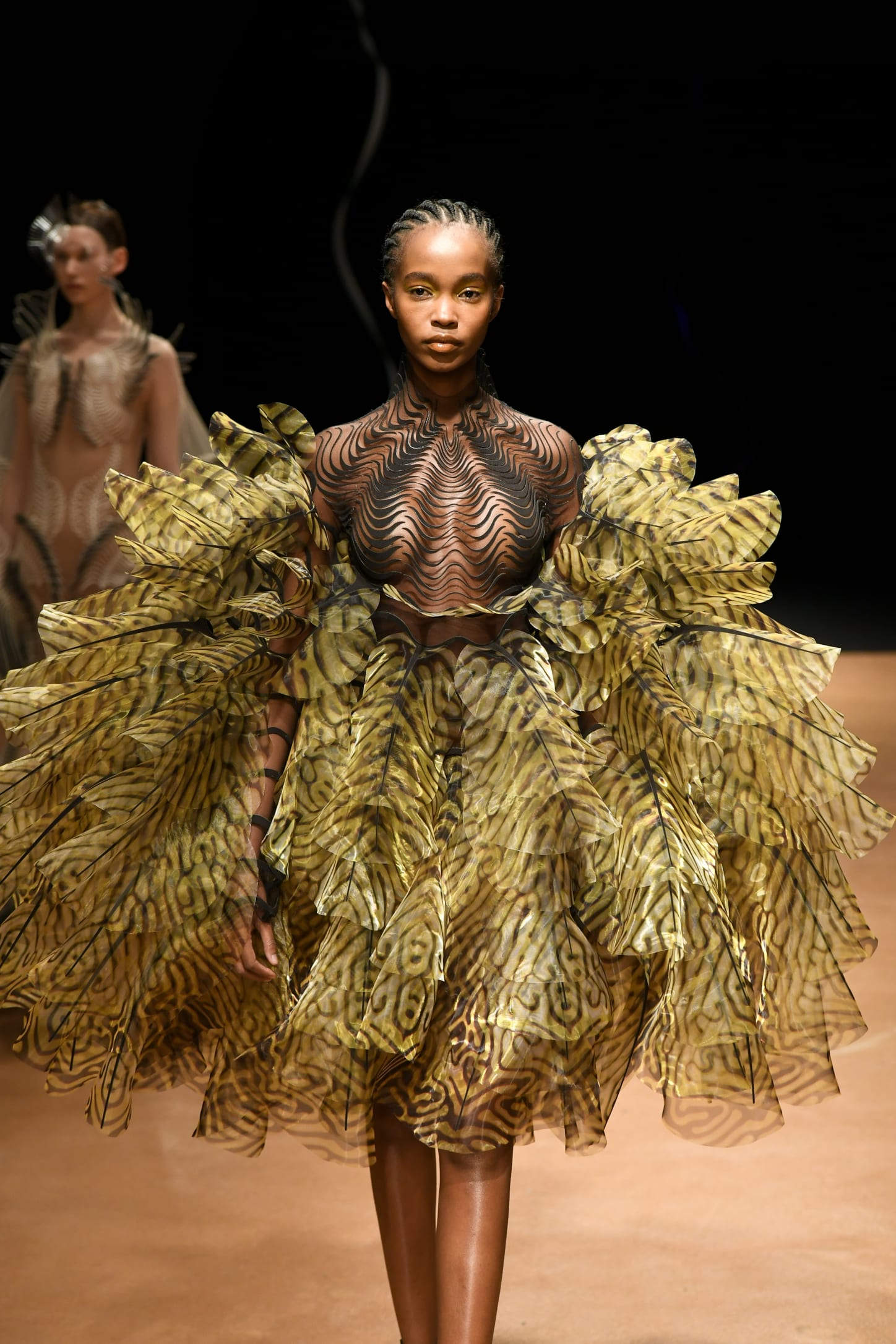
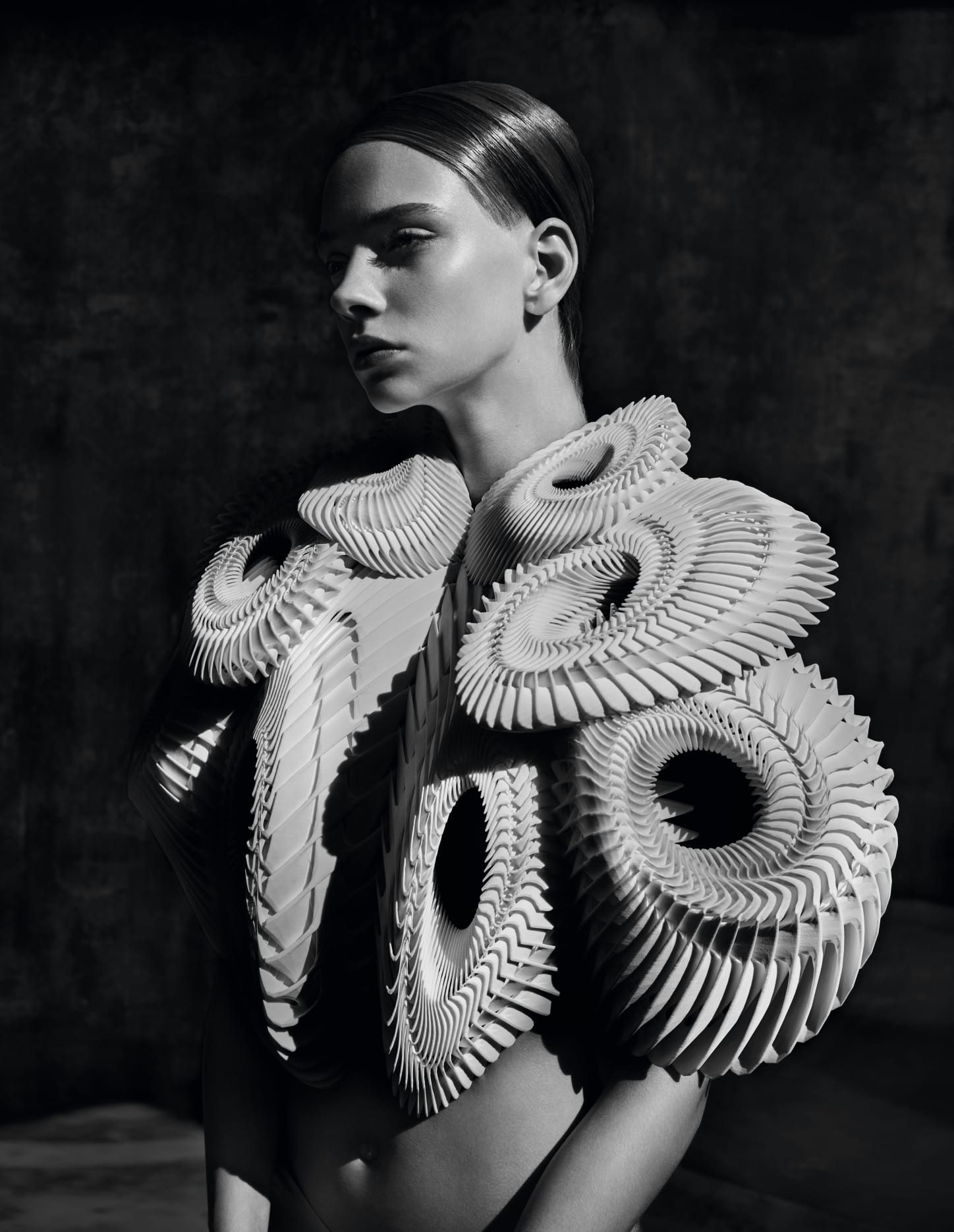
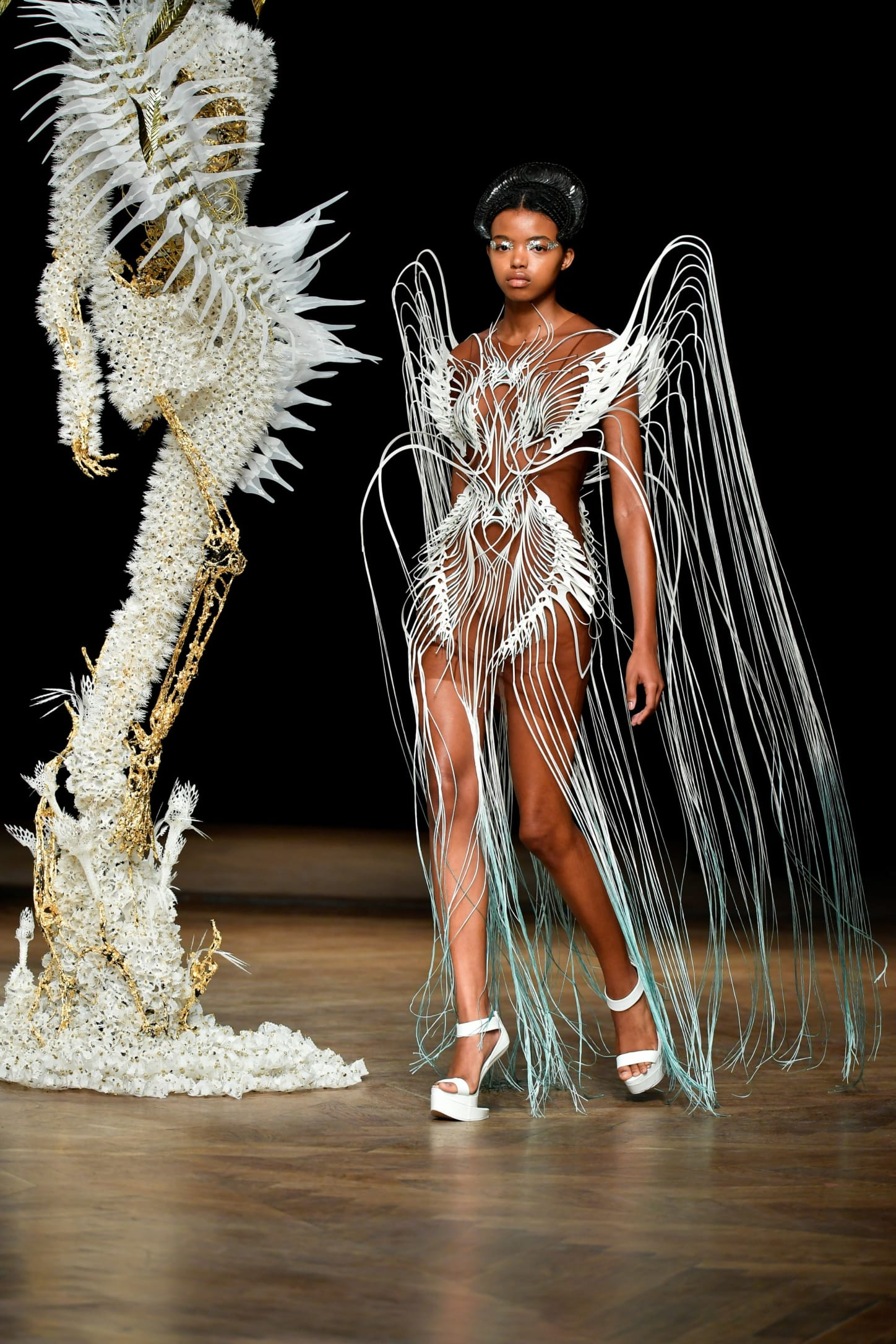
For the daring fashion explorer Iris van Herpen, anything is possible. No one champions the idea of clothing as art better than this Dutch designer, who has made new technologies her allies. YEET MAGAZINE10
In this exclusive interview, van Herpen speaks with YEET Magazine about her journey into fashion, her creative inspirations, and the advice she has for emerging designers.
YEET Magazine: When did you realize you wanted to be a designer?
Iris van Herpen: I actually came to it later than most. I initially thought I’d go into dance; that was my first passion. But during my time at art academy, I started exploring painting, sculpture, and fashion. I realized fashion was a space where I could bring all of these elements together, combining them into a cohesive form. That’s when I knew I wanted to be a designer.
YEET: How has your background in dance influenced your work?
Iris: Dance has been a huge influence. My work is very much about transformation and movement—extending the body into a transformative, almost ethereal presence. Dance taught me to focus on fluidity and motion, which I now aim to embody in my garments. The idea that we, as human beings, are in constant transformation is something I try to express through my designs.
YEET: Can you describe your design process? We understand it’s a unique blend of creativity and production.
Iris: Absolutely, the creative and design processes are intertwined and often chaotic. Production and design happen simultaneously, which keeps things fluid and evolving. We usually start by developing materials and techniques, which then lead to draping and reshaping. The process isn’t linear—it’s full of experimentation, where we move forward, backward, and sideways until we land on a final look that resonates.
YEET: You frequently use unconventional materials. Can you share how you source and develop these?
Iris: Material innovation is a continuous pursuit, not something I do just for each collection. I collaborate with scientists, biologists, artists, and material developers, combining knowledge across fields to test new ideas. Sometimes we even revisit past ideas that initially seemed impossible but are now feasible due to advancements. It’s very organic, with collaboration at its core. We’re often trying to make the impossible possible.
YEET: How have your designs evolved over the years?
Iris: My designs have become more fluid and expressive of movement over time. Initially, movement was an inspiration; now it’s embedded in the techniques themselves. I think my work has also become more colorful and optimistic, and much more collaborative. Working with different disciplines has brought new perspectives that have deepened my approach to fashion.
YEET: Where do you draw inspiration from, and how do you stay inspired?
Iris: Inspiration comes from many fields outside of fashion—science, biology, architecture, and music, especially since my partner is a musician. I’m also inspired by literature; I read a lot. I believe that drawing from a wide range of sources keeps my work fresh and allows me to bring a unique perspective to fashion.
YEET: What do you feel is the greatest motivation behind your work?
Iris: For me, it’s about expanding the boundaries of what fashion can be. Fashion today is heavily commercialized, but I believe there’s a beautiful depth in couture that allows for self-expression and exploration of identity. Couture allows us to delve into questions of who we are and why we dress the way we do, which to me is deeply meaningful and fulfilling.
YEET: What has been the most challenging material you've worked with?
Iris: One of the toughest was a collaboration with Dutch artist Jolan van der Wiel. We developed a two-component material using iron powder shaped by magnets, creating natural, chaotic structures. Balancing between chaos and order in this process was challenging but incredibly rewarding. It was a beautiful example of collaborating with nature itself.
YEET: Is there a material you've always wanted to work with but haven’t yet?
Iris: Yes, I’ve been fascinated by an invisibility cloak material that bends light and creates the illusion of transparency. It’s still not commercially available as it’s patented, but the possibilities it offers for transforming the human silhouette are exciting. Hopefully, it will become accessible in the future.
YEET: Lastly, what advice would you give to new designers starting out in the industry?
Iris: My advice is not to overthink things and avoid perfectionism. Perfectionism, while often seen as a strength, can limit your experimentation and growth. Mistakes are essential to progress. Embrace trial and error because you’ll never know exactly what the future holds. Sometimes you just have to stop thinking and start doing—momentum is key.
Related content: Check out more from YEET Magazine’s exclusive interviews with other boundary-pushing designers and creatives.
YEET Magazine : When did you know you wanted to be a designer?
So I first knew I wanted to be a designer when I was at the art academy. It was quite late, for a long time I thought I was going into dance. That was my dream, but along the way I realized I want to combine more disciplines.
I did one year of painting, sculpting and fashion where I realized I could combine everything in fashion.
YEET: How has your dance training influenced your thinking?
I think everything that I do is about transformation, it's about movement, it's about extending the body into this transformative spirit. This really comes from my background in dance. When I was dancing my focus was on transformative motion, on how fluid we are as human beings. So this is what I want to express in the garments as well.
YEET: Tell us about your design process? We have read that you start the creation and design at the same time.
The creative process and the design process are very linked and quite chaotic. Production and design happen at the same time. We often start with a material development and then a technique development. Once we start draping the design changes and then we go full circle and start again with the design process. It's not like a straight line from beginning to end. We go forwards, backwards, left and right until we reach the final look that we love.
YEET: You often use unusual material in your designs. Can you tell us about the research and production process of these materials?
Finding new materials is an ongoing process. It's not something that I do for collections only. It includes collaborations we have outside of the Atelier with biologists, scientists, artists and fabric companies. All of this knowledge is combined to do a lot of tests and a lot of failures. I think a big part of that experimental process is also based on having an idea that is not realistic now, but you come back to it many years later and then actually it works.
It's a very organic process and the key element of it is collaboration. It's about bringing different people and disciplines together and sharing knowledge. Making the impossible happen, sometimes.
YEET:How has your design evolved through the years?
My designs have evolved throughout the years in different ways. They have become more fluid. The inspiration of dance and transformation has always been there, but the techniques have evolved so radically that transformation and movement is now literally embodied within the techniques rather than it being an inspiration.
It has also become more colorful, maybe more optimistic. It's also much more collaborative now.
YEET: Where do you get your inspiration from? How do you stay continuously inspired?
Inspiration comes from many different disciplines. I don’t necessarily take inspiration from fashion. It really comes from science, artists that I know or collaborate with, biology, dance and architecture is a big source of inspiration. Music, as my partner is a musician. Sound in general. I find a lot of inspiration reading, I read a lot of books.
YEET: What do you consider to be the greatest motivation behind your work?
Widening the vision of what fashion is, what fashion can be and what it can go towards. I think we're living in a very fluid world in which a lot of our communal vision is expanding and fashion has become very commercially driven.
A lot of the intersections between art and fashion are hard to find and I think that's what the beauty of couture really expresses. That deeper layer of why we are dressing ourselves and exploring who we are.
It's the very fundamental questions of life and who we are that we can actually express through this very personal form of art.That's why I'm in fashion.
YEET: What is the most difficult material you have worked with? Can you tell us about the challenges that you had to overcome?
One of the most difficult materials we've worked with was made in collaboration with Jolan van der Wiel, a dutch artist working with magnets.
We worked on a two component material in which we used iron powder and we used magnets to grow their structures, which was a very beautiful way of creating, because it was a collaboration with nature. A very simple force of magnetic field that shaped our final details. The process of finding the right balance between chaos and order was very delicate.
"You have to be comfortable with making mistakes. That's the only way that you can really move forward."- Iris van Herpen
What is the one material that you’d really like to work with, or explore the possibilities of using?
There is one material that I've been looking at for many, many years and I still haven't been able to put it into the collections. It's this invisibility cloak which bends light. It sounds very sci-fi but it actually already exists. It's patented so it's not on the commercial market.
It makes whatever is behind it visible, it creates the illusion of full transparency. I've always been fascinated by sculpting the body and that means being able to add and take away.
I think adding is one thing, but really taking away parts can really transform the human figure even more radically. I think it will be possible in maybe a few years
YEET: What is your best advice for new designers starting out in the industry?
One advice I would give to anyone starting their own business or label is to not overthink things and also not to become a perfectionist.
Even though I think this is within all of us, I'm a perfectionist, but I know how much it has also limited me and has limited my process. There is definitely quality in it, but it can very easily stop you in experimentation and also in pushing your own limits.
I think we live in a society where there is a lot of social pressure, how to be this perfect version of yourself. The only way that you can successfully build something is also by trial and error. You cannot know the exact right things to do in the coming 10 years. You have to be comfortable with making mistakes.
That's the only way that you can really move forward. It's that simple, but it's really hard. I'm an over-thinker and I'm in my head too much. So that's why I'm giving that advice. Stop thinking sometimes, just do and then you go a lot faster.
Related content
- Exploring the Future of Sustainable Fashion
- Inside the World of Avant-Garde Fashion
- How Technology is Shaping Modern Fashion Design
- The Top 10 Most Innovative Designers to Watch
- A Deep Dive into the Intersection of Fashion and Art
- The Rise of 3D Printing in Haute Couture
- Breaking Down the Fashion of the Met Gala
- How Streetwear Became High Fashion
- A Look at Minimalism in Fashion Design
- The Evolution of High-Tech Fabrics
- How to Build a Personal Style That Lasts
- The Influence of Architecture on Fashion
- Vintage Style: Why Retro is Back in Vogue
- Ethical Fashion Brands Making a Difference
- Bold Colors and Prints in Today’s Fashion
- Exploring Cultural Influences in Modern Design
- The Impact of Fashion on Mental Health
- How Fashion Week is Adapting to a New World
- The Return of 90s Fashion Trends
- The Art of Creating Sustainable Wardrobes
- Behind the Scenes with Leading Fashion Photographers
- How AI is Transforming the Fashion Industry
- Exploring Fashion in Film: Iconic Movie Costumes
- The Role of Gender Fluidity in Fashion Today
- Textile Innovations Shaping the Future
- Inside the World of Couture Craftsmanship
- The Best Street Style Looks of the Year
- Top Fashion Icons of the Decade
- How Music and Fashion Influence Each Other
- The Secret to Parisian Style
- The Role of Accessories in Fashion Design
- Fashion Designers Who Made History
- The Future of Digital Fashion and Virtual Runways
- Key Looks from the New York Fashion Week
- Unpacking the Allure of High Fashion Collaborations
- The Cultural Relevance of Fashion in 2023
- How Fashion is Adapting to Climate Change
- Profiles on Emerging Designers Around the World
- How Fashion Trends Start and Spread
- Crafting a Capsule Wardrobe That Works
- Exploring the Fashion of Different Decades
- The Art of Tailoring and Its Lasting Impact
- The Role of Social Media in Fashion Today
- How Fabric Choices Define a Collection
- Fashion Photography: Behind the Lens with Top Creatives
- What Makes Scandinavian Style So Popular?
- The Reemergence of Vintage Denim
- Spotlight on the Most Iconic Fashion Shows
- Redefining Luxury: The Future of Fashion Brands
- Key Fashion Tips from Industry Insiders
- The Influence of Japanese Street Style Worldwide
More Fashion News
 YEET MAGAZINE
 YEET MAGAZINE
 YEET MAGAZINE
 YEET MAGAZINE
 YEET MAGAZINE
 YEET MAGAZINE