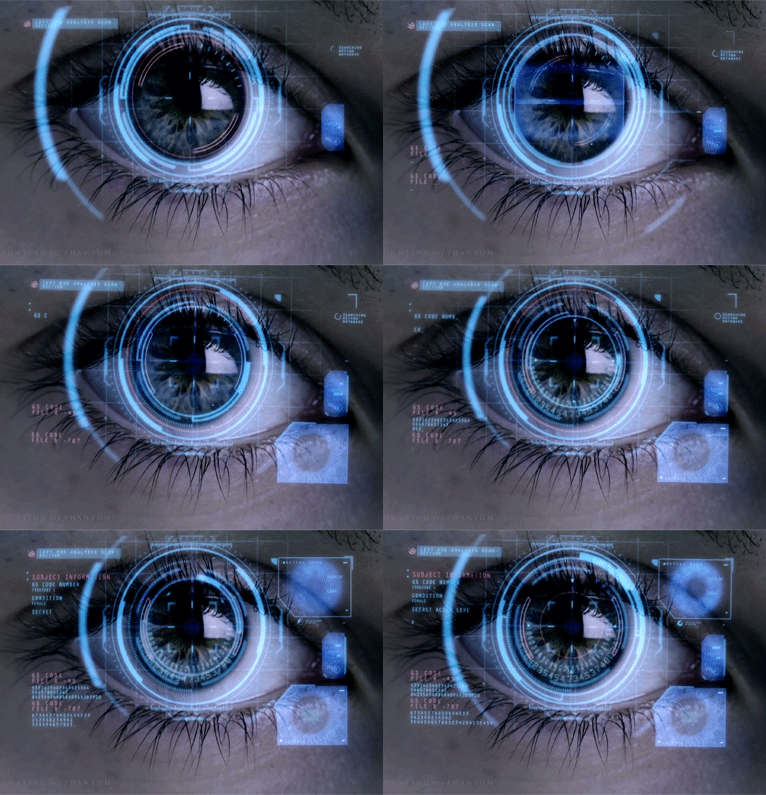
Will Human Brains Get Smaller in the Future?
Scientists believe human brains may change over time as artificial intelligence takes over memory, decision-making, and information storage. This article explores how the human brain could evolve in the future.

AI / Science / Tech / Internet Culture / Future / Viral / Explainers
By YEET Magazine Staff, YEET Magazine
Published April 14, 2026
Humans are already changing how they think
Human brains are not fixed. They adapt based on how we live.
Today, people rely heavily on:
- smartphones for memory
- GPS for navigation
- AI for answers and decisions
This means the brain is doing less “storage work” than before.
The result is simple: the brain is starting to change its role.
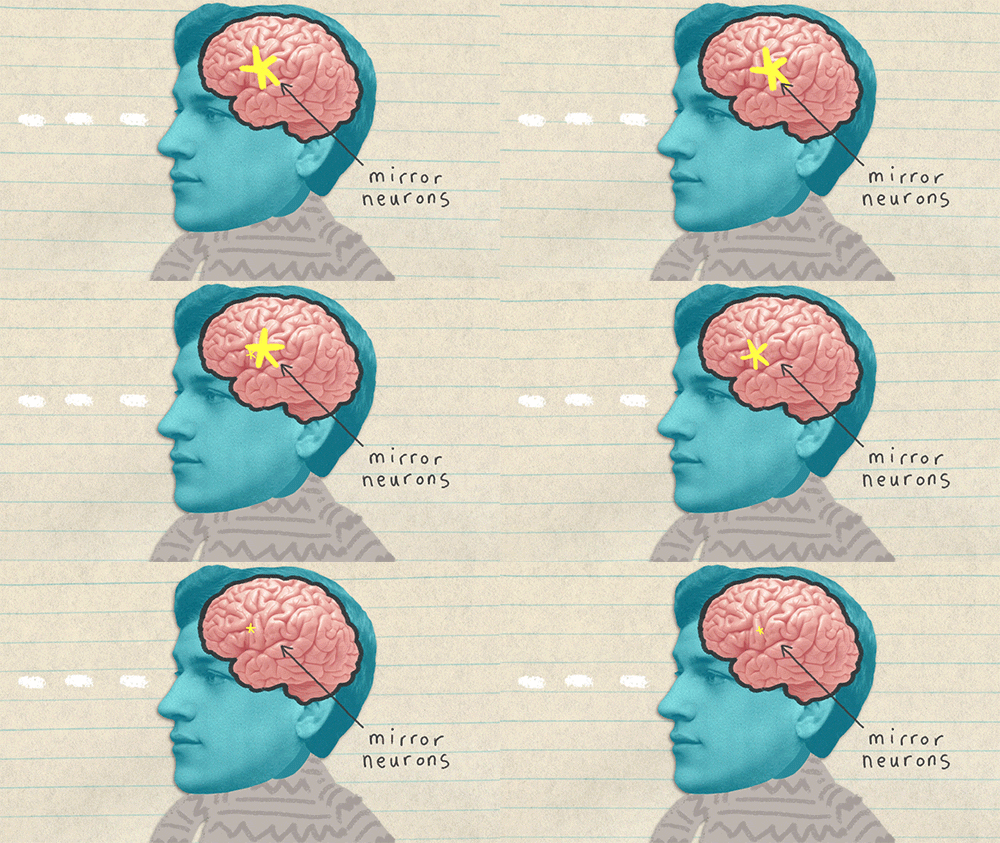
Memory may no longer be the brain’s main job
In the past, humans needed to remember everything:
- directions
- facts
- survival information
Now most of that is external.
With AI and digital tools, memory becomes outsourced.
This could lead to:
- less need for long-term recall
- stronger focus on interpretation and decision-making
- more reliance on external systems
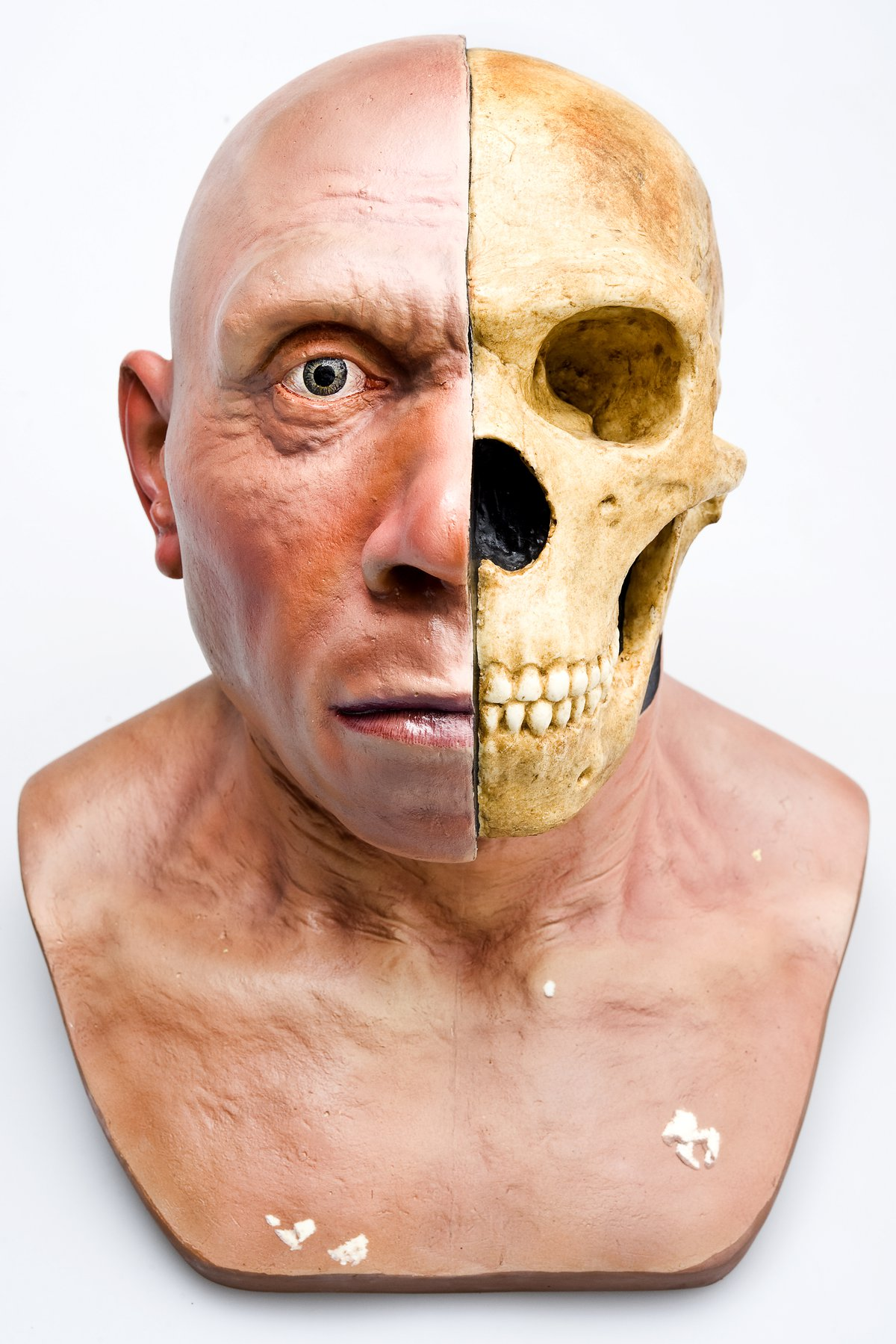
Could the brain actually become smaller?
Some scientists suggest that if certain functions are no longer needed, evolution may reduce the energy spent on them.
That does not mean “less intelligent.”
It could mean:
- different structure, not weaker structure
- more efficient processing
- specialization instead of general memory storage
Evolution does not aim for “bigger.” It aims for “useful.”
The role of artificial intelligence in brain evolution
AI changes everything because it acts like an external brain.
Humans may gradually:
- think in collaboration with AI
- offload repetitive thinking tasks
- rely on systems for faster decisions
This could reshape how neural pathways are used over time.
The brain adapts to what it uses most.
Neural implants and the next stage
Future technology could push this even further.
Brain-computer interfaces may allow:
- instant access to information
- memory enhancement
- direct communication with machines
At that point, biological memory becomes less important.
Conclusion
Human brains may not simply get “smaller.”
They are more likely to:
- change function
- reduce unnecessary capacity
- integrate with technology
- evolve toward efficiency instead of raw memory
The future brain may not be weaker or stronger.
It may simply be built for a different world.
🔗 Related reads
 YEET MAGAZINE
 YEET MAGAZINE
 YEET MAGAZINE