
Why Did So Many People Feel the Los Angeles 5.0 Earthquake?
A magnitude 5.0 earthquake can be felt across a wide area. Here's why distance, depth and ground conditions matter during an earthquake near Los Angeles.

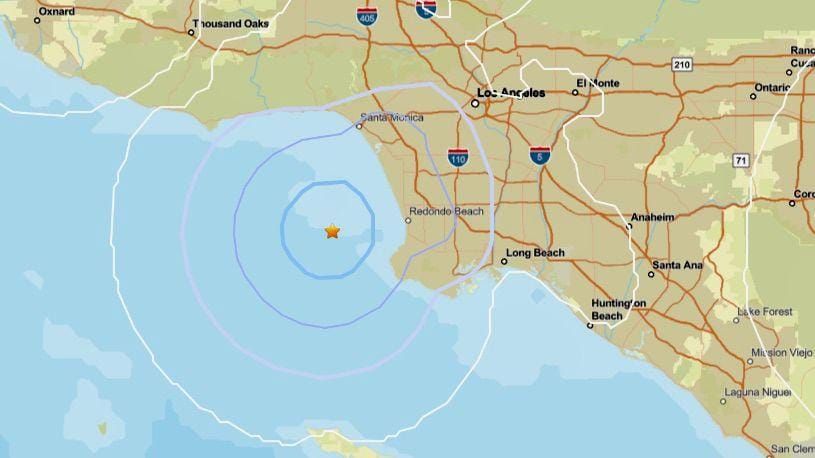
YEET Magazine — Los Angeles Earthquake Coverage
Why Did So Many People Feel the Los Angeles 5.0 Earthquake? The Science Behind the Widespread Shaking
A magnitude 5.0 earthquake struck offshore near Manhattan Beach on November 28, 2026, but shaking was felt across a much wider part of Southern California. Here is why the tremor travelled so far, what determines how strongly an earthquake is felt, and what residents should understand about aftershocks.
The Los Angeles earthquake on November 28, 2026, was measured at magnitude 5.0, but its effects were felt well beyond the immediate area of its epicenter. Residents across Southern California reported shaking after the earthquake struck offshore near Manhattan Beach at approximately 9:30 a.m. Pacific time. The tremor rattled homes, moved household objects and triggered mobile phone alerts, leaving many people asking the same question: why could an earthquake of this size be felt across such a large area?
The answer involves more than magnitude. An earthquake's depth, its distance from populated areas, the type of ground beneath buildings and the way seismic waves travel all influence how people experience the shaking.
The event is part of the developing story covered in our main report: 5.0 Earthquake Near Los Angeles Today: Where It Hit, Damage Reports and Aftershocks.

Where Did the Los Angeles 5.0 Earthquake Begin?
The earthquake's epicenter was located approximately 6 kilometers west-southwest of Manhattan Beach, along the Los Angeles County coastline. The United States Geological Survey recorded the earthquake at 9:30:29 a.m. Pacific time on November 28, 2026.
The event was measured at magnitude 5.0, with a recorded depth of approximately 12.23 kilometers. That depth matters because seismic waves lose energy as they travel through the Earth. A relatively shallow earthquake can produce noticeable surface shaking across nearby communities, even when its magnitude is moderate.
Nearby communities included Hermosa Beach, Redondo Beach, El Segundo and Torrance. Los Angeles residents farther inland also reported feeling the movement.
You can consult the official USGS earthquake event record for the event's location, magnitude and updated measurements.
Why Can a Magnitude 5.0 Earthquake Be Felt So Far Away?
Magnitude measures the energy released at the earthquake's source. It does not tell the whole story of how strongly people will feel the event at a particular address.
Seismic waves travel outward from the earthquake's origin. As they move through the Earth's crust, they carry energy toward surrounding communities. People can feel those waves even when they are many kilometres from the epicenter.
Several factors help explain why the November 28 earthquake was noticed across a wide area.
1. The Earthquake Was Relatively Shallow
Earthquake depth is one of the most important factors affecting surface shaking. When an earthquake begins relatively close to the surface, seismic energy has less distance to travel before reaching buildings and communities above it.
The Manhattan Beach earthquake was recorded at approximately 12.23 kilometers deep. That does not automatically make it dangerous, but it helps explain why people near the coast and across parts of the Los Angeles region noticed the movement.
A deeper earthquake can release substantial energy while producing a different pattern of shaking at the surface. The actual impact depends on the combination of magnitude, depth, distance and local ground conditions.
2. Seismic Waves Travel Beyond the Epicenter
The epicenter marks the point on the Earth's surface directly above where an earthquake begins. It is not a boundary around the area that can experience shaking.
Seismic waves spread outward through the ground. Their strength generally decreases with distance, but they can remain noticeable well beyond the communities closest to the epicenter.
This is why residents in different parts of Southern California could experience the same earthquake differently. Someone close to Manhattan Beach might notice a sharp jolt, while someone farther away could experience a slower rolling movement or only a brief vibration.
3. Local Ground Conditions Can Amplify Shaking
Not all ground responds to seismic waves in the same way. Solid bedrock and softer sediments can transmit and amplify earthquake energy differently.
Some areas are built on deep layers of sediment, former river deposits or other softer materials. Under certain conditions, those materials can amplify particular seismic waves and make shaking feel stronger or last longer than it might on nearby solid rock.
This helps explain why two people living at similar distances from an earthquake can describe very different experiences. The geology beneath their homes may not be the same.
4. Buildings Respond Differently to Earthquake Movement
The design, age, height and condition of a building can influence how occupants experience an earthquake. A structure may sway, vibrate or transmit movement differently depending on its construction and the frequency of the seismic waves.
People on upper floors may notice movement differently from people on the ground floor. Loose objects, hanging lights, shelves and dishes can also make shaking more noticeable inside a home.
Feeling strong movement does not necessarily mean a building has suffered structural damage. However, visible cracks, shifting foundations, damaged utilities or other warning signs should never be ignored.
Why Did Some Residents Feel a Sudden Jolt While Others Felt Rolling Shaking?
Earthquakes do not produce one identical sensation everywhere. The experience depends partly on the seismic waves reaching a location and how the ground and buildings respond to them.
Some people describe a sharp jolt, as if something heavy has struck the building. Others report a rolling sensation that seems to move through the floor or walls. A person may also notice objects rattling before they consciously recognize that an earthquake is happening.
The difference can be influenced by the distance from the epicenter, the local geology, the building's structure and the characteristics of the waves passing through the area.
That is why reports from different neighbourhoods can sound inconsistent even when everyone is describing the same earthquake.
Why Did the Los Angeles Earthquake Trigger So Many Phone Alerts?
Earthquake alert systems are designed to warn people when sensors detect seismic activity that may produce shaking in their area. Depending on the system and the user's location, an alert may arrive shortly before stronger shaking is expected or while the earthquake is already occurring.
These systems do not predict earthquakes days or hours in advance. They detect an earthquake after it begins and use rapid information from seismic sensors to estimate where shaking may travel.
The time available for a warning can be very short. People close to the epicenter may receive little or no advance notice, while communities farther away may have more time to react.
For more on the alerts residents received during this event, read our related coverage: Why Did Phones Send Earthquake Alerts During the Los Angeles 5.0 Quake?
Could More Earthquakes Follow the Los Angeles 5.0 Tremor?
Yes. Smaller earthquakes, known as aftershocks, can occur after a larger earthquake. They may happen within minutes, hours or days, and some sequences can continue for weeks or longer.
Aftershocks occur as the surrounding rock adjusts to changes in stress following the main earthquake. They are often smaller than the original event, although some can still be strong enough to be felt or cause additional damage to already weakened structures.
An aftershock does not automatically mean that a larger earthquake is coming. Scientists cannot reliably predict the exact time, location or magnitude of a future earthquake.
Residents should follow updates from the USGS and local emergency officials rather than relying on rumours or unsupported predictions.
Read our related report: Could More Earthquakes Follow the Los Angeles 5.0 Tremor? What Aftershocks Mean.
What Should You Do If You Feel an Earthquake in Los Angeles?
Earthquake safety authorities recommend the simple procedure known as Drop, Cover and Hold On. The goal is to protect your head and neck from falling objects, broken glass and other hazards.
- Drop: Get down onto your hands and knees before the shaking knocks you over.
- Cover: Protect your head and neck beneath a sturdy table or desk. If no shelter is nearby, move close to an interior wall and cover your head.
- Hold On: Stay under your shelter and hold on until the shaking stops.
If you are indoors, stay indoors during the shaking. Do not run outside while objects may be falling. Keep away from windows, glass and heavy furniture that could topple.
If you are outside, move away from buildings, power lines and other potential hazards. After the shaking stops, check for injuries, look for damaged utilities and follow instructions from local emergency services.
The CDC earthquake safety guide and the American Red Cross earthquake preparedness guide provide additional instructions.
Why Is Emergency Preparedness Important After an Earthquake?
The November 28 earthquake is a reminder that households should prepare before an emergency happens. Even when initial reports indicate no major damage, earthquakes can disrupt electricity, transport, communications and access to shops or essential services.
A household emergency kit should include drinking water, food for several days, first-aid supplies, necessary medication, a flashlight, spare batteries, a radio, phone charging equipment, sturdy shoes and copies of important documents.
Families should also consider the needs of children, older adults, people with disabilities and pets. A communication plan can help household members reconnect if they become separated.
For more information about emergency food and household supplies, see our related YEET report: Why Emergency Food Supplies Are Becoming Part of Household Preparedness.
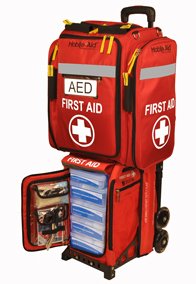
MobileAid Emergency Response Station
A dedicated emergency first-aid station can help households, workplaces and community spaces keep essential medical supplies organised and accessible.
Shop Emergency First Aid Equipment →
Emergency Go-Bag and Evacuation Supplies
A ready-to-carry emergency bag can help keep essential supplies together if your household needs to leave quickly or manage an unexpected disruption.
Shop Emergency Bags →Disaster Preparedness Kits
Explore emergency kits, first-aid supplies, backup lighting, water storage and other essentials to help prepare your household for unexpected emergencies.
Shop All Emergency Supplies →What Does the Los Angeles Earthquake Tell Us About California's Seismic Risk?
Southern California is located in a seismically active region shaped by the movement of the Pacific and North American tectonic plates. Stress builds along faults and is released through earthquakes of different magnitudes and depths.
A moderate earthquake can be felt across a large area without producing the destruction associated with a major seismic event. But the experience is a reminder that earthquake readiness is not only relevant to people living directly above a fault line.
The impact of an earthquake depends on its magnitude, depth, distance from communities, ground conditions and the vulnerability of buildings and infrastructure.
For broader context, read our report on another major seismic event: 7.2-Magnitude Earthquake Strikes Near Mexico City: Damage, Response and What Residents Experienced.
What Happens Next?
Scientists and emergency officials continue to monitor seismic activity and assess the effects of the November 28 earthquake. Measurements and reports may be updated as additional information becomes available.
For residents, the immediate priorities remain straightforward: stay alert for official updates, check homes and workplaces for hazards, prepare for possible aftershocks and make sure essential emergency supplies are accessible.
The magnitude 5.0 earthquake near Manhattan Beach demonstrated how a moderate seismic event can be felt across a much wider region. Understanding how seismic waves travel helps explain the experience, but preparedness remains the most practical response.
Frequently Asked Questions About the Los Angeles 5.0 Earthquake
Why did so many people feel the Los Angeles 5.0 earthquake?
The earthquake was relatively shallow and occurred offshore near Manhattan Beach. Seismic waves travelled outward through the ground, allowing residents across a wider part of Southern California to feel the shaking.
How far away can a magnitude 5.0 earthquake be felt?
There is no single fixed distance. The area where shaking is felt depends on earthquake depth, local geology, the strength of the seismic waves and the sensitivity of buildings and people.
Why did the Los Angeles earthquake feel stronger in some neighbourhoods?
Local ground conditions and building design can affect how seismic waves are experienced. Softer sediments may amplify certain types of shaking, while buildings can respond differently depending on their structure and height.
Was the Los Angeles earthquake shallow?
The November 28, 2026 earthquake was recorded at a depth of approximately 12.23 kilometers, according to the USGS event information.
Why did some people feel rolling shaking while others felt a sudden jolt?
People can experience different types of movement depending on the seismic waves reaching their location, the local ground conditions and the way their building responds.
Can a magnitude 5.0 earthquake be felt across an entire city?
Yes. Depending on depth, distance and ground conditions, a magnitude 5.0 earthquake can be felt across a large metropolitan area and surrounding communities.
Why did phones send earthquake alerts in Los Angeles?
Earthquake early-warning systems detect seismic activity after an earthquake begins and can send alerts to areas where shaking is expected. They do not predict earthquakes in advance.
Could more earthquakes follow the Los Angeles 5.0 earthquake?
Yes. Aftershocks can occur after an earthquake, sometimes for days or longer. Scientists cannot predict their exact timing or magnitude.
Does feeling a strong earthquake mean a bigger one is coming?
No. Strong shaking does not automatically mean a larger earthquake will follow. Residents should follow official seismic updates rather than assume that a larger event is imminent.
What should Los Angeles residents do after an earthquake?
Check for injuries and hazards, watch for damaged utilities, avoid visibly damaged buildings and follow instructions from local emergency officials. Keep emergency supplies ready in case of further disruption.
What Do You Think?
Did you feel the November 28 earthquake in Los Angeles or another part of Southern California? Did it feel like a sudden jolt or a rolling movement? Share your experience in the comments.
Follow YEET Magazine for more breaking news, science reporting and developing stories.
Explore Topics
Sources: U.S. Geological Survey; Centers for Disease Control and Prevention; American Red Cross; Associated Press; Southern California Seismic Network / Caltech.
As an Amazon Associate, YEET Magazine earns from qualifying purchases.